Brazil Timber Market 2025: Data for Importers
Brazil is consistently among the world's top five timber exporters. Understanding the export data helps importers anticipate supply availability, price cycles, and competitive dynamics — particularly for pine plywood, MDF, and sawn wood from the southern states.
This article reviews Brazil's timber export performance through 2025, the key destination markets, and what the trends mean for B2B buyers.
Looking for the current numbers? This article is a point-in-time snapshot. For the version we keep updated — export volumes, destinations, FOB price benchmarks and the regulatory timeline in one place — see the Brazil Timber Export Statistics hub.
Key facts (2025): Brazil's total wood products exports exceeded USD 4.5 billion, with pine plywood and panels accounting for approximately USD 1.1 billion. Brazil exported roughly 3.2 million m³ of pine plywood, with the United States (~35% of volume), the European Union (~25%), and the Middle East (~10%) as the top destination markets. Brazil is consistently among the world's top five timber exporters.
Brazil's timber export profile
Brazil's timber and wood products exports are concentrated in four main categories:
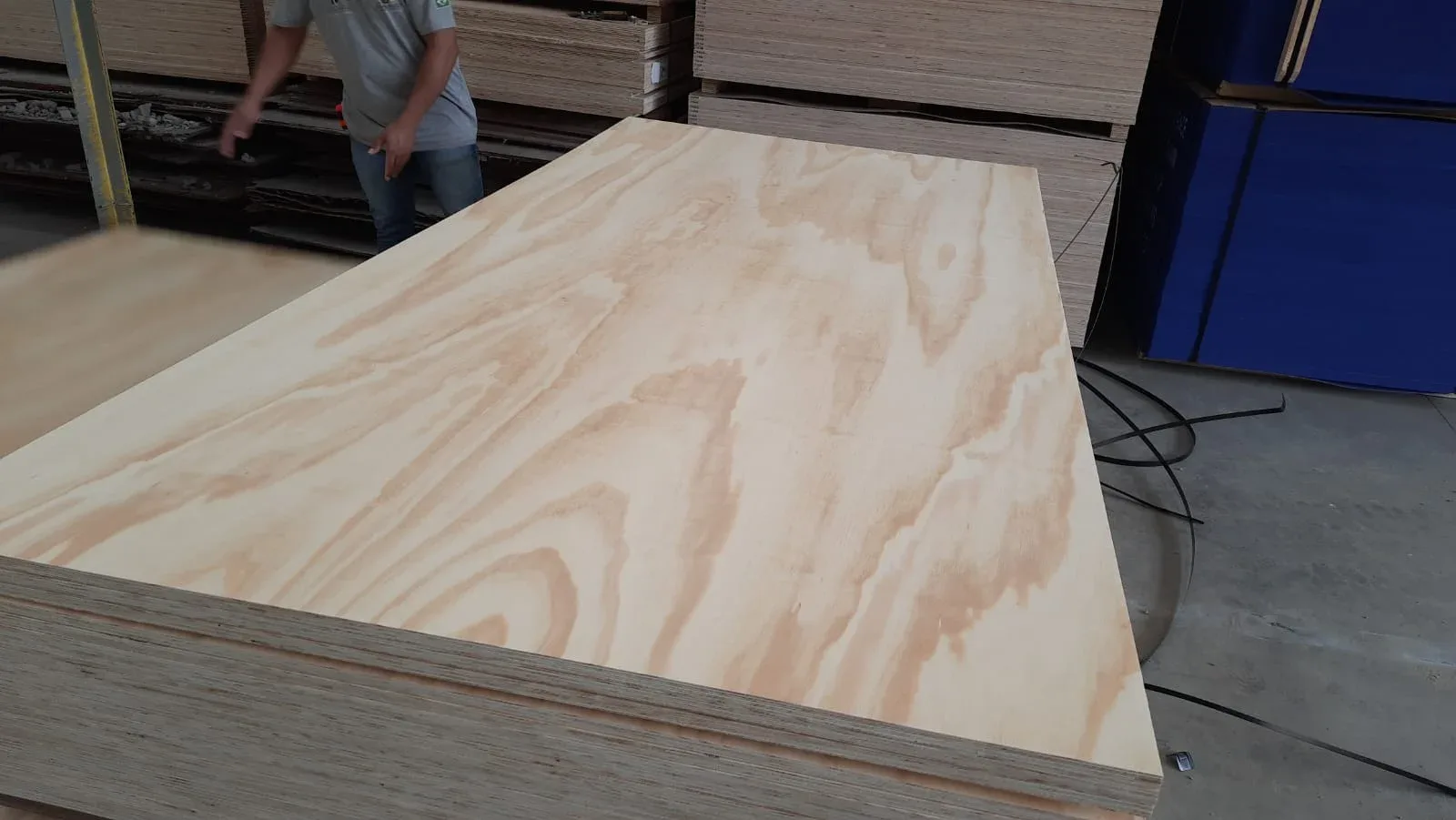
- Pine plywood (HS 4412) — Brazil is the world's largest exporter of softwood plywood. Southern Brazil's Paraná and Santa Catarina states supply 90%+ of export volumes.
- MDF and wood-based panels (HS 4411) — Significant export volumes, primarily E1-grade panels for furniture manufacturing.
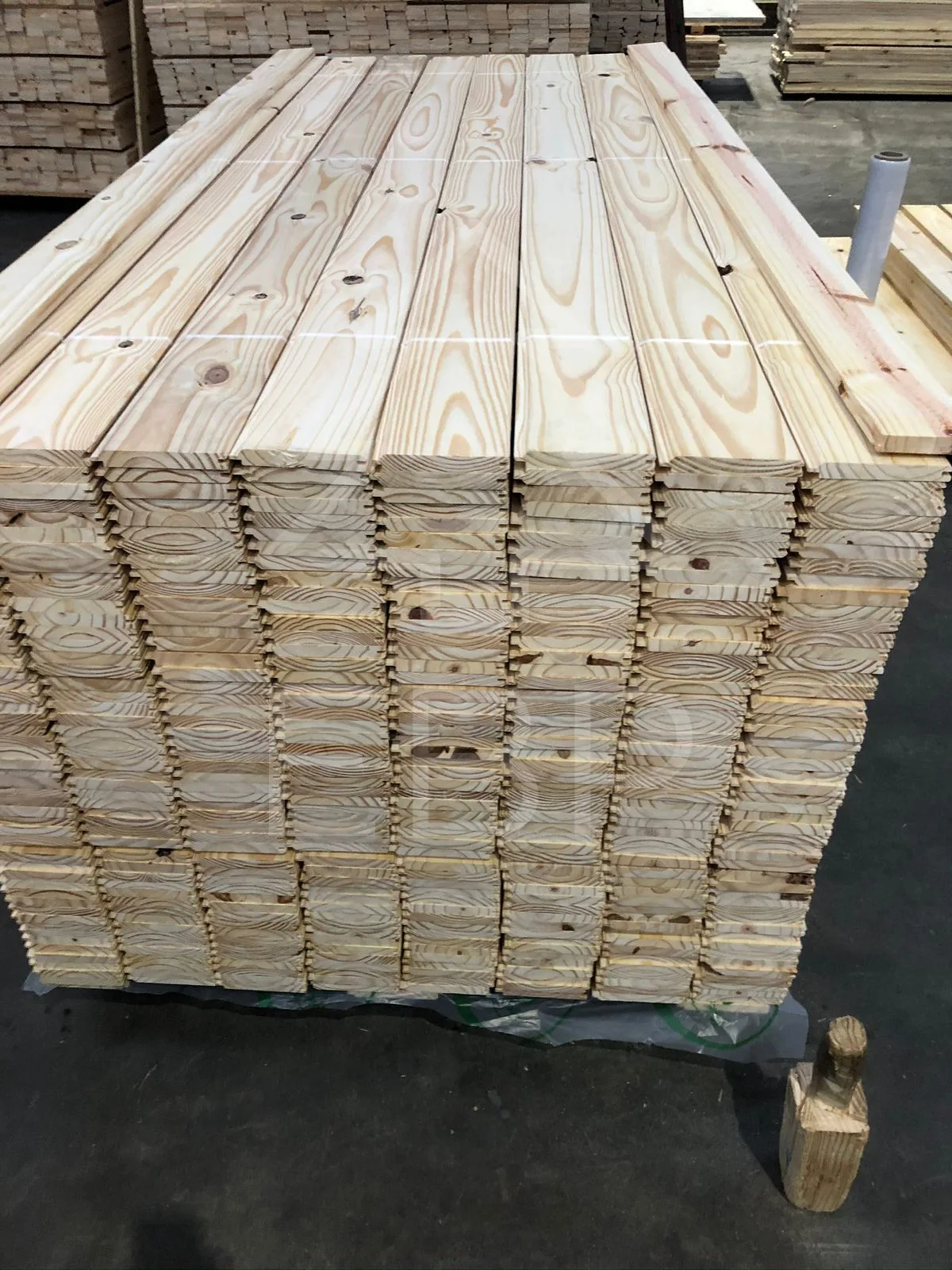
- Sawn pine (HS 4407) — Pinus elliottii and Pinus taeda sawn timber, primarily for construction and joinery.
- Wooden furniture and components (HS 9403, 9401) — A growing category, particularly flat-pack and KD collections.
In 2025, Brazil's total wood products exports exceeded USD 4.5 billion, with plywood and panels accounting for approximately USD 1.1 billion.
Pine plywood: volumes and destinations
Brazil exported approximately 3.2 million cubic metres of plywood in 2025 — essentially flat compared to 2024 after a strong 2022–2023 growth period driven by US housing demand.
Top export destinations for Brazilian pine plywood (2025 estimate):
| Destination | Share of volume | Key driver |
|---|---|---|
| United States | ~35% | CDX structural, housing demand |
| European Union | ~25% | A/B furniture grade, EUDR compliance |
| United Kingdom | ~8% | Construction and joinery |
| Middle East | ~10% | Film-faced formwork, construction |
| Asia Pacific | ~8% | Various grades |
| Other Americas | ~7% | Regional construction |
| Africa | ~4% | Film-faced, CDX |
| Other | ~3% | — |
The US remains the dominant buyer, accounting for roughly one-third of volume. However, its share declined slightly in 2025 as anti-dumping duties created headwinds for some Chinese competitors (redirecting Chinese buyers toward Latin American product) while Brazilian volumes held broadly steady.
Price trends 2023–2025
Pine plywood FOB prices from Brazil have followed a broad pattern:
- 2021–2022: Sharp price increases driven by pandemic-era construction booms, particularly in the US
- 2023: Price correction as US housing starts declined and inventory normalised
- 2024: Stabilisation with modest recovery in H2 2024 as EU EUDR uncertainty resolved
- 2025: Moderate strengthening through H1 2025, with B/B 18mm trading in the USD 370–420/CBM FOB Paranaguá range for full-container orders
Key price factors in 2025:
- BRL/USD exchange rate (a weaker Real makes Brazilian exports more competitive)
- Southern Brazilian pine log prices (constrained by plantation cycles and environmental licensing)
- Ocean freight rates (normalised from 2021–2022 peaks)
- US tariff environment on Chinese plywood (reduces Chinese competition, supports Brazilian pricing)
The EUDR effect on Brazilian timber exports
The EU Deforestation Regulation (EUDR), which took effect in June 2023 with enforcement beginning January 2025, has had a measurable effect on Brazilian timber sourcing patterns.
Brazil's plantation pine (Pinus elliottii, Pinus taeda) originates from FSC-certified or IBAMA-registered plantations with geolocation data available. This puts Brazilian pine plywood in a structurally advantaged position relative to supply from higher-risk tropical forest regions.
European buyers who previously sourced from Southeast Asia or tropical African suppliers have begun qualifying Brazilian pine suppliers to reduce EUDR compliance risk. This is reflected in growing EU market share for Brazilian pine plywood in 2024–2025.
FSC-certified plywood from Brazil now commands a small but consistent price premium (typically USD 10–20/CBM above non-certified comparable product) in the EU market, driven by demand from buyers requiring chain-of-custody documentation for their own customers.
MDF exports: strong growth
Brazilian MDF exports grew approximately 18% in 2024 and continued expanding in 2025. Key factors:
- Brazilian MDF producers have invested heavily in E0.5 production capacity to serve EU and US premium segments
- Growing demand from furniture manufacturers in Poland, Germany, and Spain qualifying Brazilian supply as an alternative to domestic production
- Competitive pricing versus European producers, particularly for large-format panels (1830 × 2750mm)
Brazil is now the third-largest MDF exporter globally, behind China and Turkey.
Sawn pine: construction demand driver
Brazilian sawn pine exports grew modestly in 2025, driven by European construction demand. Southern Brazilian Pinus elliottii and Pinus taeda are competitive alternatives to European spruce and Scandinavian pine for structural framing, joinery, and furniture components.
Key sawn pine export markets: UK, Netherlands, Germany, Portugal, and Australia.
What the data means for importers
Supply is reliable and growing. Brazil's plantation base is among the most extensive in the world. Unlike tropical hardwood supply (which is subject to environmental controls and seasonal disruption), plantation pine supply is predictable on a multi-year horizon.
EUDR favours Brazilian suppliers. If you import into the EU and haven't yet qualified a Brazilian pine supplier, 2025–2026 is the time to do it. Compliance documentation from Brazilian exporters is increasingly standardised and straightforward to obtain.
The USD/BRL rate matters. When the Brazilian Real weakens (e.g., BRL 5.5–6.0/USD), Brazilian FOB prices in USD become particularly competitive. Monitor the exchange rate when planning procurement cycles.
Container availability at Paranaguá. The Port of Paranaguá in Paraná state handles the majority of pine plywood exports. Container shortages in 2021–2022 are unlikely to recur at similar scale, but scheduling lead times of 4–6 weeks from order to vessel loading are standard.
Graded supply is concentrated. The highest-grade A/B plywood for furniture and architectural applications comes from a relatively small number of mills in Paraná and Santa Catarina. If grade consistency matters to your buyers, qualifying a specific mill (rather than a trading house) gives you more control.
Sources
Export statistics in this article are based on Brazilian government trade data (SECEX/MDIC), industry association reports (ABIMCI, ABIPA), and Export Brazil Pine commercial intelligence. Figures are estimates and may be revised as final 2025 data is published.
Related reading
Brazil Timber Export Statistics hub (updated) · Brazil's Timber Regions: Paraná and Santa Catarina · EUDR and Brazilian Timber Imports · How to Vet a Brazilian Timber Supplier · Pine Plywood
Looking to source from Brazil's timber market? Export Brazil Pine gives you direct access to certified mills in Paraná and Santa Catarina — the heart of Brazil's pine belt. We provide current FOB pricing, grade specifications, and full documentation for every shipment. Request a quote for your spec →
Ready to source from Brazil?
We'll send specs, photos, and pricing within 24 hours.
Stay informed
New guides, specs & market updates
Join 400+ timber importers who get our monthly brief — no spam, unsubscribe anytime.
Contents
Get a quote
Ready to source Brazilian timber? We will send specifications, pricing and photos within 24 hours.
Request a quote