How to Source Timber From Brazil: US Guide
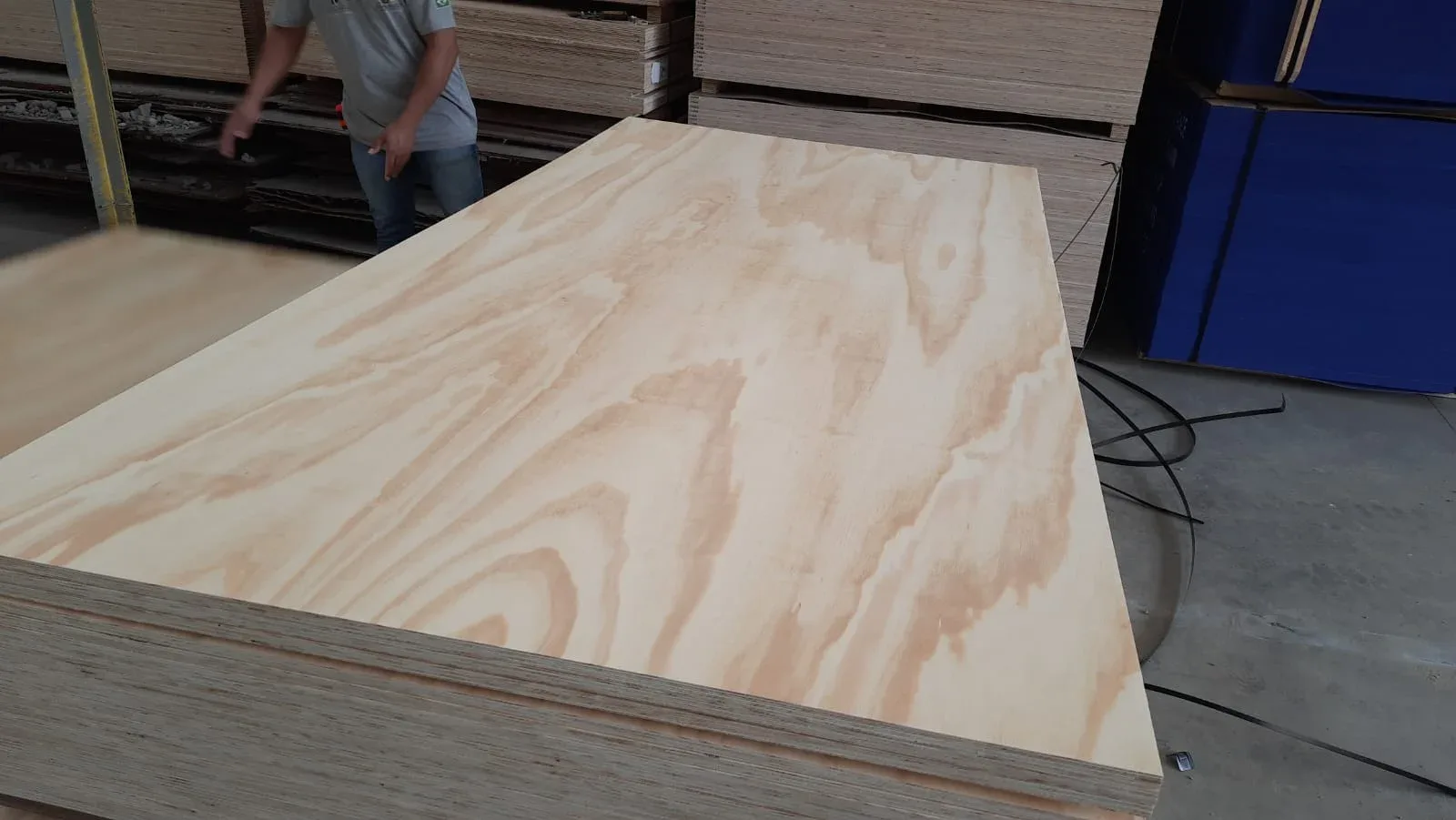
US importers looking to source timber directly from Brazil are in a strong position. Brazilian pine plywood, MDF, and sawn timber offer competitive FOB pricing, no anti-dumping duties, and FSC or CARB P2 certification for the most demanding buyers. The challenge is finding the right exporter — one that ships consistently, documents correctly, and handles the compliance requirements that US customs and California CARB regulations demand.
This guide walks through exactly how to find, evaluate, and partner with a Brazilian timber exporter for ongoing B2B supply.
Why source timber directly from Brazil?
Before talking about how to find exporters, it's worth understanding why direct sourcing from Brazil makes commercial sense for US importers.
No anti-dumping or countervailing duties. Chinese plywood exports to the US face AD/CVD duties of 33–194% depending on the manufacturer. Brazilian plywood enters at the standard MFN rate with no additional tariffs. This is a structural cost advantage that applies to every container you import.
CARB P2 certification available. California's Air Resources Board Regulation (CARB) requires composite wood products sold in California — and under federal TSCA Title VI, nationwide — to meet strict formaldehyde emission standards. Brazilian manufacturers producing to the US market have CARB-certified lines (≤ 0.05 ppm). You get a single supplier for the full US market.
FSC certified at scale. Brazil's southern pine plantations (Pinus elliottii, Pinus taeda) in Paraná and Santa Catarina are among the world's largest FSC-certified plantation forests. Certified supply at commercial volumes — not just at a premium — is available.
Consistent grades. Brazilian manufacturers produce to defined visual grading standards. CDX, A/B, B/B are genuine grade specifications, not marketing labels. What you specify in your purchase order is what arrives in the container.
Types of Brazilian timber suppliers
Understanding who you're dealing with matters for pricing, lead times, and documentation.
Direct mills — manufacturers that own or operate their own production facility. They have the most control over quality, grading, and documentation. They may have minimum order requirements of 2–3 FCL per run.
Export trading companies — Brazil-based intermediaries that aggregate supply from multiple mills. More flexible on mix and volume, but you're adding a layer of margin and potentially losing traceability. Ask for the mill name and IBAMA export licence — a legitimate trading company will provide this.
US-based importers/distributors — companies that import from Brazil and resell in the US. Convenient for smaller volumes, but you pay a substantial markup over FOB price. For FCL volumes, going direct to Brazil almost always makes financial sense.
For B2B buyers placing 1+ container per month, working directly with a Brazilian mill or a Brazil-based exporter with direct mill relationships is the right model.
How to find Brazilian timber exporters
1. Brazilian trade data Brazilian export data is publicly available through MDIC (Ministry of Industry, Foreign Trade and Services). Commercial databases like ImportGenius, Panjiva, and Flexport Intelligence provide searchable records of Brazilian timber shipments to US ports. Search for shipments to Houston, Baltimore, or Savannah with HS codes 4412 (plywood) or 4411 (MDF). You'll find the exporter name, CNPJ, volume shipped, and US consignee.
2. ABIMCI and ABIPA directories ABIMCI (Brazilian Association of Industrialized Timber) and ABIPA (Brazilian Association of Wood Panels Industry) maintain member directories of manufacturers. These are the industry associations for sawn wood and panels respectively. Members are established manufacturers, not fly-by-night trading houses.
3. Trade shows Expoforest (Brazil), Ligna (Germany), and the APA-EWS structural panels trade events list Brazilian suppliers. These are also good places to meet factory representatives face-to-face before placing large orders.
4. Direct referrals Talk to other US importers who are already sourcing from Brazil. This is the fastest path to a vetted supplier. Lumber yards, building product distributors, and furniture manufacturers that import from Brazil will typically share supplier names if you're not a direct competitor.
What to verify before your first order
Once you have a shortlist, run through this checklist:
Company verification
- CNPJ (Brazilian tax ID) — verify at receita.fazenda.gov.br
- IBAMA export registration — required for all timber exporters
- Export shipping history — confirm via ImportGenius/Panjiva
Certifications
- FSC Chain of Custody certificate — verify directly at info.fsc.org using their certificate number
- CARB TPC (Third Party Certifier) documentation — request the lab report and CARB TPC number
- Formaldehyde test report — from SGS, Bureau Veritas, or Intertek
Quality verification
- review current-lot photos and documentation before placing any order
- Specify the exact grade, thickness, and bond type in writing
- Measure thickness, moisture content, and inspect veneer quality on receipt
Structuring your first FCL order
Define the specification precisely. Don't write "18mm B/B plywood." Write:
Pine plywood B/B grade, 18mm (nominal), 1220×2440mm, WBP phenolic bond, E1/CARB P2, moisture ≤12%, ABNT NBR 9531, FSC certified, 250 sheets per bundle, 55 CBM per 40HC.
Start with one 40HC container. This minimises risk while validating quality. A 40HC holds approximately 55–60 CBM of plywood — roughly 750 sheets of 18mm or 1,100 sheets of 12mm. Inspect 5–10% of sheets on arrival before accepting.
Standard payment terms. Most Brazilian exporters work on TT: 30% deposit after proforma invoice acceptance, 70% balance against copy of bill of lading. For new relationships, request a SWIFT confirmation of deposit before production starts. For orders above $100,000, Letters of Credit at sight are a credible alternative.
Lead time expectations. From order confirmation to vessel loading: 3–5 weeks (if product is in stock) to 6–8 weeks (if custom production). Port-to-port from Paranaguá to US East Coast (Baltimore, Savannah, New York): 14–18 days. Gulf Coast (Houston, New Orleans): 18–22 days. West Coast via Panama: 25–30 days.
Building a long-term supply relationship
The best Brazilian timber partnerships are ones where the importer becomes a reliable, predictable buyer. Tactics that work:
Forecast 90 days out. Brazilian mills manage production runs 4–8 weeks ahead. If you can share a 90-day volume forecast (even approximate), your supplier can plan production and reserve container space, which reduces your lead time and improves your position in queue.
Consolidate specifications. The more consistent your orders (same grades, same thicknesses, same sizes), the better pricing leverage you have. Mills give better rates for predictable, repeatable business than for one-off mixed orders.
Agree on documentation standards upfront. US importers need CARB TPC paperwork, FSC TC, ISF-ready commercial invoices, and ISPM 15-certified packaging. Agree what documents are required per shipment before your first order — not after the container ships.
Export Brazil Pine: direct partnership for US importers
Export Brazil Pine supplies CDX, A/B, B/B, B/C, film-faced, and T1-11 siding plywood, as well as MDF, sawn pine, and furniture, direct from mills in Paraná and Santa Catarina state. CARB P2 certified. FSC available. No anti-dumping. FOB Paranaguá.
Use the inquiry form to receive our current FOB pricing, product spec sheet, and CARB documentation package. We respond within 24 hours on business days.
Related reading
CARB P2 Certified Pine Plywood from Brazil · Import Duties on Plywood: USA, EU, UAE & Australia · Sourcing Brazilian Pine Plywood for the US Housing Market · How to Vet a Brazilian Timber Supplier · Pine Plywood · CDX Plywood
Ready to source from Brazil?
We'll send specs, photos, and pricing within 24 hours.
Stay informed
New guides, specs & market updates
Join 400+ timber importers who get our monthly brief — no spam, unsubscribe anytime.
Contents
Get a quote
Ready to source Brazilian timber? We will send specifications, pricing and photos within 24 hours.
Request a quote