Importing Pine Furniture from Brazil: Cost, Quality & MOQ
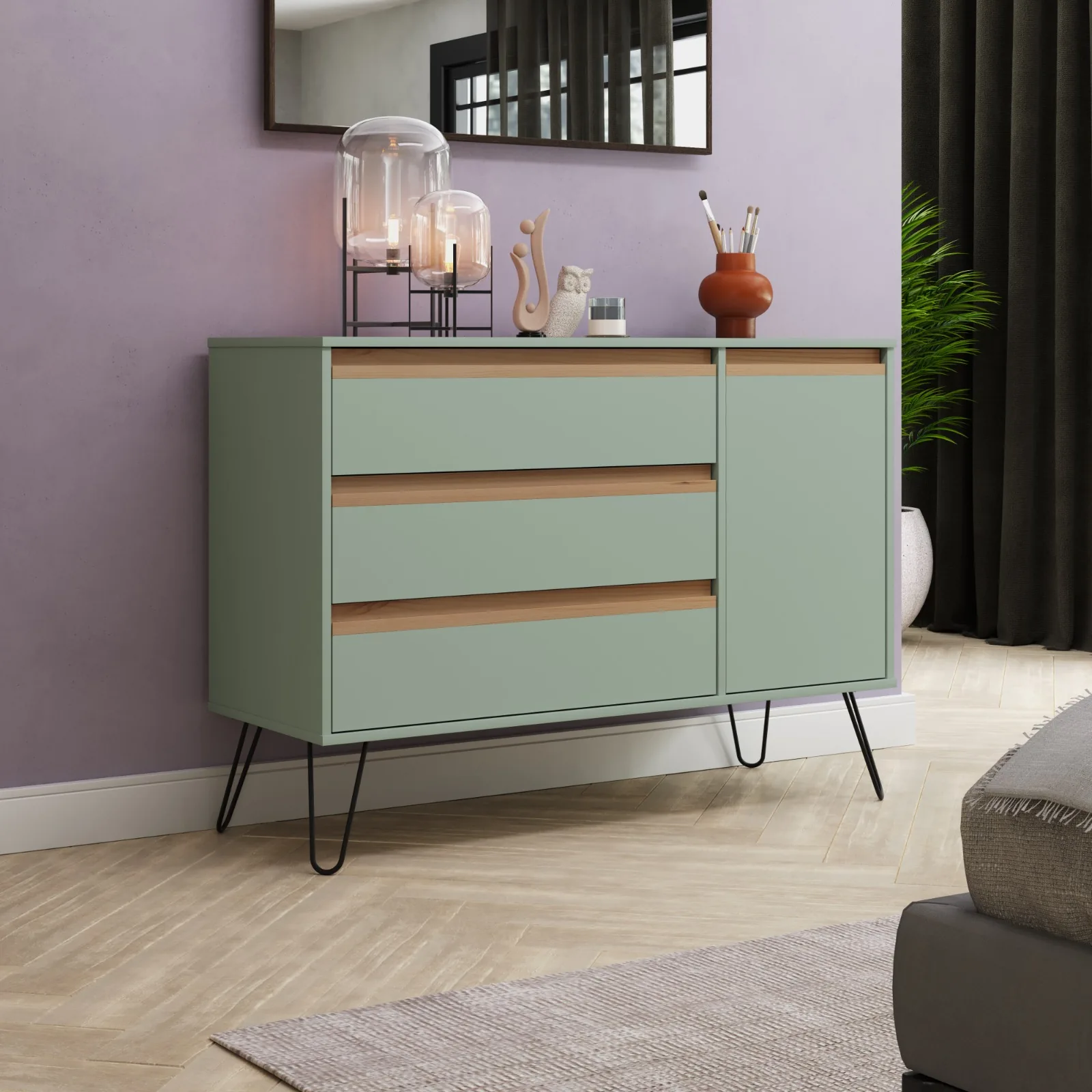
Brazilian pine furniture has quietly become one of the more competitive options for importers across North America, Europe, and the Middle East. The combination of solid wood construction, competitive pricing, FSC certification availability, and a mature export infrastructure makes it worth a serious look — even if you've never sourced from Brazil before.
This guide covers the key reasons importers choose Brazilian furniture, what to watch for when evaluating suppliers, and how the logistics actually work.
Why Brazil for Furniture?
1. Solid Wood at Competitive Prices
The core appeal is simple: Brazil produces large volumes of plantation-grown Pinus elliottii and Pinus taeda — the same species used in structural and panel products — and a well-developed downstream industry converts that timber into finished furniture.
Because the mills own or have long-term contracts with the plantations, the raw material cost is structurally lower than in markets that import their timber. That saving flows through to FOB pricing. A solid pine bedroom set that would cost USD 450–600 ex-factory in Europe or Southeast Asia frequently comes in at USD 280–380 FOB Brazil, depending on finish and complexity.
This is not furniture made with engineered wood dressed to look solid. The standard export product is genuine solid pine — visible grain, real weight, actual wood.
2. Eight Established Collections, Ready to Ship
The Brazilian pine furniture export industry has consolidated around a relatively small number of well-specified product families. Rather than starting from scratch with custom designs, most importers choose from existing collections:
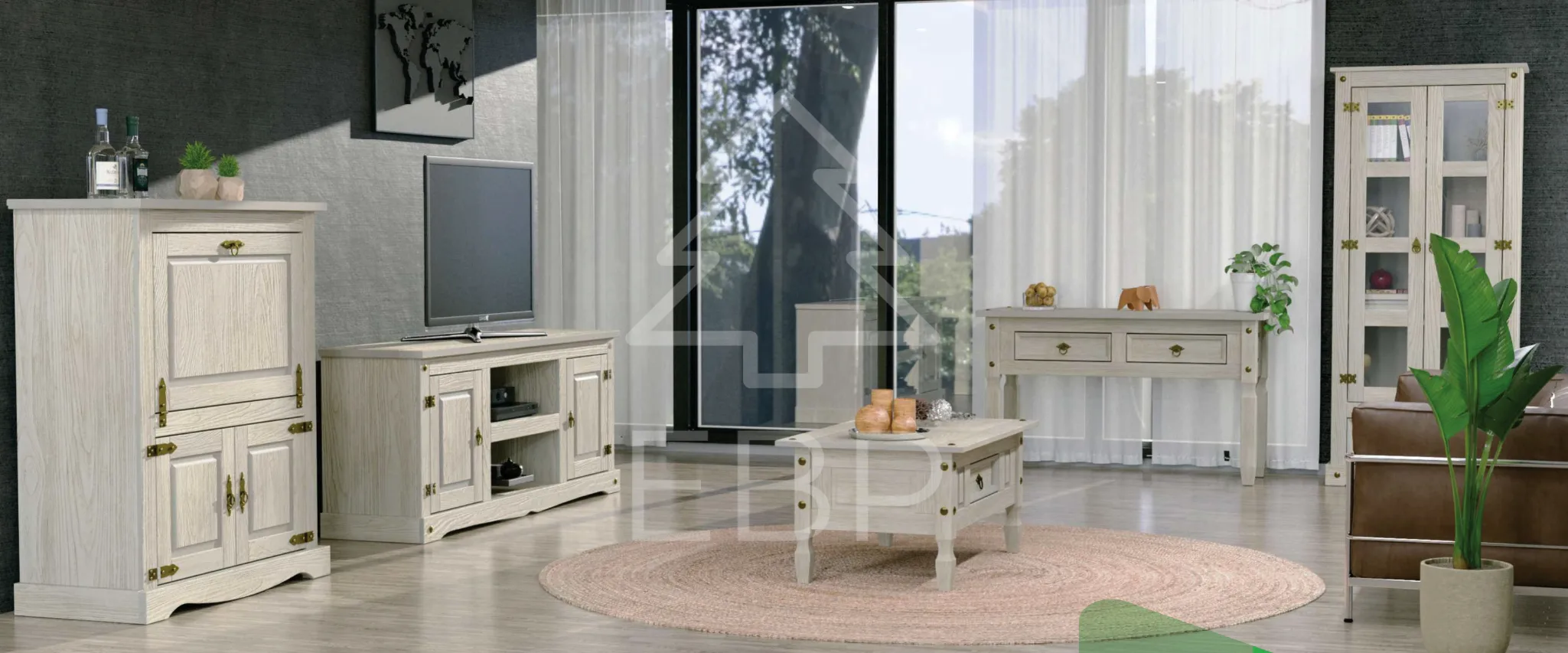
- Venice — clean lines, dado joinery, suits Scandinavian-influenced retail
- Rustic — prominent grain, knotted pine, popular in North American and Middle Eastern markets
- Nature — light honey finish, minimal hardware, broad market appeal
- TCN — commercial specification, flat-pack friendly, hotel and rental supply
- Parisian — moulded detail, turned legs, traditional European styling
- Crystal — glazed door fronts, display cabinets, bedroom and living room units
- Beam — heavy timber aesthetic, exposed joinery, premium positioning
- Native — Brazilian design influence, strong grain character
Each collection covers the full room — beds, wardrobes, dressers, nightstands, dining tables, chairs, sideboards, TV units. Ordering a full container mix from a single collection is straightforward and reduces your SKU coordination overhead.
3. FSC Certification Available
For importers selling to retailers with sustainability requirements — large format DIY chains, furniture multiples, e-commerce platforms with responsible sourcing policies — FSC Chain of Custody certification is increasingly non-negotiable.
Brazilian pine furniture mills can supply FSC-certified product. The plantation timber comes from southern Brazil's well-managed Pinus estates, and the leading export mills hold FSC CoC alongside their manufacturing certification. This is not a niche offering: it's standard for any serious export-grade supplier.
If your market requires EUDR compliance documentation (EU Deforestation Regulation), Brazilian plantations also qualify — the supply chain is traceable to specific plantation parcels, and the documentation infrastructure is in place.
4. Flat-Pack KD Options
Not all Brazilian furniture ships assembled. Many collections are available in KD (knock-down) flat-pack format, which offers two advantages:
Container utilisation — KD furniture packs significantly more units per 40HC than assembled pieces. A 40HC container of assembled bedroom sets might carry 40–50 units. The same container in KD format can carry 120–160 units, depending on the collection. At current freight rates, this difference in container efficiency has a meaningful impact on landed cost per unit.
Retail compatibility — Flat-pack furniture is compatible with click-and-collect and home delivery retail models. Assembly instructions and hardware kits are included as standard.
Assembled furniture is also available for buyers who prefer it — typically for the hospitality sector, contract furnishing, or markets where customers expect assembled product.
5. Custom Finishes and Private Label
The leading Brazilian furniture exporters are not rigid about catalogue specifications. For buyers with sufficient volume (typically one full container per SKU per order), custom finishes are available:
- Stain colours — from natural pine and honey tones through grey, white, dark walnut, and charcoal
- Paint finishes — white and off-white are the most common; RAL matching is possible with lead time
- Hardware — handle styles, hinge types, drawer runners can be specified
- Dimensions — standard variations (width, height, depth) are often accommodated within an existing collection tooling
Private label is available for buyers who want to remove the manufacturer's branding. This is standard practice for large retailers and importers building their own product lines.
What to Watch for When Evaluating Suppliers
Moisture Content and Kiln Drying
Solid pine furniture destined for heated European or North American interiors must be kiln-dried to 8–12% moisture content before shipment. Furniture that arrives at higher moisture content will move — drawers will stick, joints will open, panels will cup.
Ask for the kiln-drying specification and request a moisture reading report for your first shipment. Established exporters will provide this without hesitation.
Joinery Quality
The structural integrity of pine furniture depends heavily on joinery. The better Brazilian manufacturers use dado, mortise-and-tenon, and dowel joinery with wood glue — the same construction used in European furniture. Avoid suppliers relying solely on pocket screws and cam-lock fittings in solid wood carcasses; this is a sign of production shortcuts.
request a cross-section photograph or specification of the corner joints before placing a first order.
Finish Consistency
Pine is a reactive wood. Without proper sanding and sealing, colour variation between pieces in the same batch can be noticeable. Reputable exporters use UV-cured or catalysed lacquer systems that lock in the finish and reduce batch-to-batch variation. Ask about the finishing line — UV curing is the standard for volume export production.
How the Logistics Work
Container Sizes
Brazilian furniture exports ship almost exclusively in 40HC (high cube) containers. The extra 30cm of height compared to a standard 40' container is significant for furniture — wardrobes and bed headboards in particular.
A standard mix for a 40HC bedroom furniture container might look like:
- 20 × 3-door wardrobes (flat-pack)
- 40 × double beds (flat-pack)
- 40 × bedside tables (assembled or flat-pack)
- 20 × 5-drawer chests
Lead Times
Standard production lead time from order confirmation to vessel loading is 8–12 weeks for stocked collections. Custom finishes or dimensions add 2–4 weeks. Allow a further 3–5 weeks for transit to Europe, 4–6 weeks to the US East Coast, and 5–7 weeks to the Middle East from the southern Brazilian ports of Itajaí and São Francisco do Sul.
Minimum Order Quantities
Export-grade manufacturers work on full container minimums — one 40'HC per order, mixed between collections. The economics of FCL are substantially better than any consolidation alternative.
Who Is Buying Brazilian Furniture?
The typical importer of Brazilian pine furniture falls into one of three profiles:
Furniture retailers and distributors sourcing a solid wood entry-to-mid price point to complement their existing range. Brazilian furniture typically sits between MDF/particleboard product at the low end and hardwood or European pine at the high end — a productive price gap for volume sales.
Contract and hospitality buyers furnishing apartments, student accommodation, hotels, and holiday rental properties. The TCN and Nature collections in particular are designed for this application — clean, robust, easy to maintain.
E-commerce operators building DTC furniture brands who need reliable, certifiable, private-label product at a price point that supports online margin. KD flat-pack shipping economics work well for this model.
The Bottom Line
Brazilian pine furniture offers genuine solid wood construction, established collection depth, certification credentials, and landed cost that is hard to match from European or Southeast Asian sources. The industry has been exporting seriously for two decades and the infrastructure — port access, logistics, documentation, quality control — reflects that maturity.
The main requirement on the buyer's side is volume: the economics work at full container quantities. If you're buying a container or more per order, Brazil is worth including in your sourcing shortlist.
Related reading
Is Brazilian Pine Good for Furniture? · Edge-Glued Solid Wood Panels Guide · EUDR and Brazilian Timber Imports · Pine Furniture
Interested in sourcing pine furniture from Brazil? Export Brazil Pine works directly alongside established furniture factories in Paraná and Santa Catarina. We handle the full process — quotations, spec confirmation, quality control, and export documentation — so you receive the product you need without managing multiple factory contacts. Browse our collections: Pine Furniture · Solid Wood Panels Request a catalogue and pricing →
Importing pine furniture?
B2B wholesale furniture direct from Brazilian mills.
Stay informed
New guides, specs & market updates
Join 400+ timber importers who get our monthly brief — no spam, unsubscribe anytime.
Contents
Continue your sourcing research
Get a quote
Ready to source Brazilian timber? We will send specifications, pricing and photos within 24 hours.
Request a quoteRelated resources