How to Vet a Brazilian Timber Supplier: Importer Checklist
Finding a reliable Brazilian timber supplier is not difficult. Finding one that consistently ships on spec, documents correctly, and handles problems professionally — that requires due diligence.
This guide gives you a practical checklist for qualifying a Brazilian pine plywood or sawn timber supplier before placing your first container order.
Why supplier vetting matters more in timber than other industries
Timber import has characteristics that make supplier quality unusually important:
Long lead times. From order to arrival, Brazilian timber shipments typically take 45–75 days. A quality problem found at goods receipt leaves you with limited immediate remedy options — the supplier is thousands of miles away and the next container is already at sea.
Grade variation is invisible from a distance. Unlike manufactured products with precise tolerances, timber grades involve visual assessment. The difference between A/B and B/B — or between conforming and non-conforming CDX — is entirely in the quality of the grading process at the mill. You cannot verify this remotely without current-lot photos.
Compliance documentation is high-stakes. For EU importers, EUDR non-compliance carries severe penalties. For US importers, CARB P2 misrepresentation is a federal violation. A supplier who provides forged or incorrectly issued certificates creates legal and financial risk for the importer.
Payment terms create exposure. Most Brazilian timber transactions are paid before loading (30% deposit + 70% before bill of lading). Once you've paid, you have limited leverage if the product doesn't match specification.
Step 1: Verify the company exists
This sounds obvious but is frequently skipped. Before any commercial discussion:
Check the CNPJ (Brazilian company registration number). Every legitimate Brazilian company has a CNPJ. Verify it at the Brazilian government's Receita Federal website (receita.fazenda.gov.br). You should be able to confirm the company name, registration status (active or inactive), address, and registration date.
Red flag: A company that can't provide a CNPJ or whose CNPJ is inactive, recently registered, or registered to a residential address.
Check IBAMA registration. Timber exporters must be registered with IBAMA (Brazilian Institute for the Environment and Renewable Natural Resources) for forest product export authorisation. Ask for the IBAMA export licence number and verify it.
Check export history. Brazilian export data is partially public via MDIC (Ministry of Industry, Foreign Trade and Services) or commercial databases like ImportGenius or Panjiva. A supplier claiming 10 years of export experience should show up in shipping records.
Step 2: Verify FSC certification
If you require FSC-certified product (for EUDR compliance, chain of custody, or customer specification):
Verify the FSC Chain of Custody certificate directly. Do not rely on the supplier's word or a certificate copy they send you. Go to the FSC public database (info.fsc.org) and search by certificate number or company name. Confirm:
- The certificate is current (not expired or suspended)
- The certificate scope covers the products you intend to purchase (e.g., "Plywood" or "Sawn timber")
- The certificate holder name matches the company you are dealing with (or is a parent company with the supplier listed as a site)
Ask for the FSC Transaction Certificate (TC). The TC is issued per shipment by the FSC certificate holder and documents the transfer of certified product from supplier to buyer. request a redacted TC from a previous shipment to confirm the supplier understands and can execute this requirement.
Red flag: A supplier who says "we will add FSC to the documents" but cannot show a current, verifiable certificate. FSC certification requires a formal audit by an accredited certification body — it cannot be added retroactively or forged without creating a traceable violation.
Step 3: Review current-lot evidence
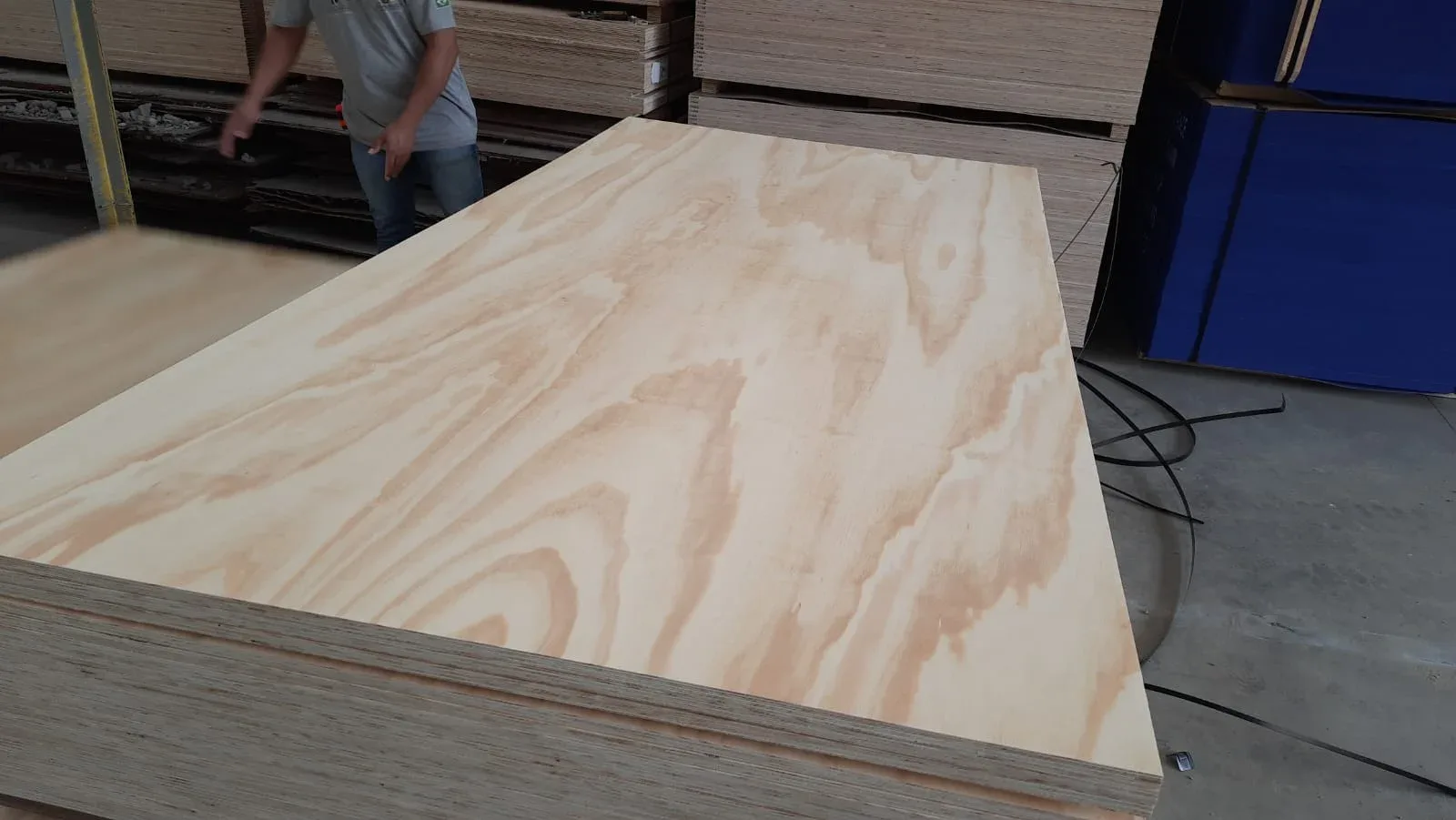
Before placing any commercial order, review current-lot photos and documentation of the specific grade, thickness, and specification you intend to purchase.
What to evaluate in the lot evidence:
- Face and back grade — verify veneer quality matches the stated grade (A/B, B/B, CDX)
- Edge quality — check for voids, delamination, open joints at panel edges
- Sanding quality — run your hand across the face; it should be uniform and smooth for A/B or B/B
- Thickness consistency — measure with a digital caliper at multiple points; variation should be within ±0.5–0.8mm
- Moisture content — use a resistance probe; KD panels should read 10–14% for standard export
- Formaldehyde — you cannot assess this from visual inspection; request the test report (see step 4)
A supplier who declines to provide current-lot documentation, charges excessive documentation fees, or takes more than 3–4 weeks to produce them is showing you something about their operational capability.
Step 4: Request the compliance documentation package
Ask the supplier for a complete set of documents as they would be provided per shipment. A reputable Brazilian pine plywood supplier should be able to provide all of the following:
| Document | Issued by | Purpose |
|---|---|---|
| FSC Transaction Certificate | Supplier (FSC certified) | Chain of custody |
| IBAMA export licence | MAPA / IBAMA | Brazilian export authorization |
| Geolocation data | Supplier / FSC auditor | EUDR plantation coordinates |
| EUDR due diligence declaration | Supplier | EU Deforestation Regulation |
| Formaldehyde test report | SGS / BV / Intertek | E1/E0.5/CARB P2 compliance |
| CE Declaration of Performance | Manufacturer | EU CPR compliance (if required) |
| EUR.1 or Form A | Brazilian customs | Duty preference (EU/UK) |
| Phytosanitary certificate | MAPA | Plant health |
| ISPM 15 HT certificate | Treatment provider | Wooden packaging compliance |
Red flag: A supplier who struggles to produce any of these, whose certificates have different company names, or who "can add" certifications that should require formal auditing processes.
Step 5: Check references
Ask for two or three existing import customers in your region. A supplier with genuine experience exporting to Europe should be able to provide a reference buyer in Germany, the Netherlands, France, or Poland. Call or email the reference.
Ask the reference:
- How long have you been buying from this supplier?
- Does the product consistently match the specification on the invoice?
- How does the supplier handle quality claims or documentation issues?
- Would you recommend them for a new import relationship?
This step is consistently skipped and consistently valuable. A single 10-minute call can surface problems that weeks of document review would miss.
Step 6: Clarify the payment and dispute process
Before placing an order, agree in writing:
- Payment terms and conditions (deposit amount, balance trigger, accepted payment method)
- What constitutes non-conforming goods and the claim process
- What documentation is provided on loading and how it is transmitted
- Lead time commitments and what happens if the loading date slips
For first orders, Letters of Credit (LC) offer more protection than TT bank transfer, though many Brazilian suppliers prefer TT. If paying TT, ensure you have a formal proforma invoice, a signed purchase order, and a clear delivery specification before transferring deposit funds.
Red flags summary
| Red flag | What it might indicate |
|---|---|
| No verifiable CNPJ or inactive registration | Not a legitimate exporter |
| FSC certificate not found in public database | Certificate not valid or forged |
| Cannot produce lot evidence within 4 weeks | Doesn't manufacture directly |
| Price significantly below market | Grade substitution, moisture issue, or fraud risk |
| Reluctant to provide references | No track record with comparable buyers |
| Documents have inconsistent company names | Multiple intermediaries, no traceability |
| Excessive documentation fees | Trading house with limited actual compliance |
| No verifiable IBAMA registration | Not authorised for timber export |
Export Brazil Pine's due diligence transparency
We provide full documentation packages on request before any commercial commitment: FSC certificate link for public verification, a redacted IBAMA export licence, a redacted formaldehyde test report, reference contacts in Europe and North America, and redacted compliance document sets matching our standard export package.
Use the inquiry form to request a due diligence package for our pine plywood or sawn wood products.
Related reading
How to Verify FSC Certification from Brazil · EUDR-Compliant Pine Plywood from Brazil · Brazil Timber Export Statistics 2025 · Pine Plywood
Ready to source from Brazil?
We'll send specs, photos, and pricing within 24 hours.
Stay informed
New guides, specs & market updates
Join 400+ timber importers who get our monthly brief — no spam, unsubscribe anytime.
Contents
Continue your sourcing research
Get a quote
Ready to source Brazilian timber? We will send specifications, pricing and photos within 24 hours.
Request a quote