ISPM 15 Heat Treatment: What Timber Importers Need to Know
If you import timber products, wooden pallets, or any solid wood packaging from Brazil, you will encounter ISPM 15. Customs authorities in over 180 countries require it. Shipments without the correct mark can be refused entry, fumigated at the importer's cost, or destroyed.
This guide explains what ISPM 15 is, what it requires, and how Export Brazil Pine handles compliance on every shipment.
What is ISPM 15?
ISPM 15 stands for International Standards for Phytosanitary Measures No. 15. It is an international plant protection standard published by the International Plant Protection Convention (IPPC), a body under the UN Food and Agriculture Organization (FAO).
The standard regulates wooden packaging materials (WPM) used in international trade — specifically to prevent the spread of invasive insects and plant diseases that travel inside untreated wood.
The most common invasive species ISPM 15 targets include:
- Bursaphelenchus xylophilus (Pine Wood Nematode) — destroys pine forests
- Anoplophora glabripennis (Asian Longhorned Beetle) — attacks a wide range of hardwoods
- Sirex noctilio (Woodwasp) — attacks pine and other conifers
These organisms can survive in raw wood for months and, once introduced to a new country, can cause catastrophic damage to forests that have no natural resistance.
What does ISPM 15 cover?
The standard applies to wooden packaging materials used to carry, protect, or support a commodity during transport:
- Pallets and pallet collars
- Crating and cases
- Dunnage (wood used to brace cargo inside containers)
- Cable drums
- Spools
It does not apply to:
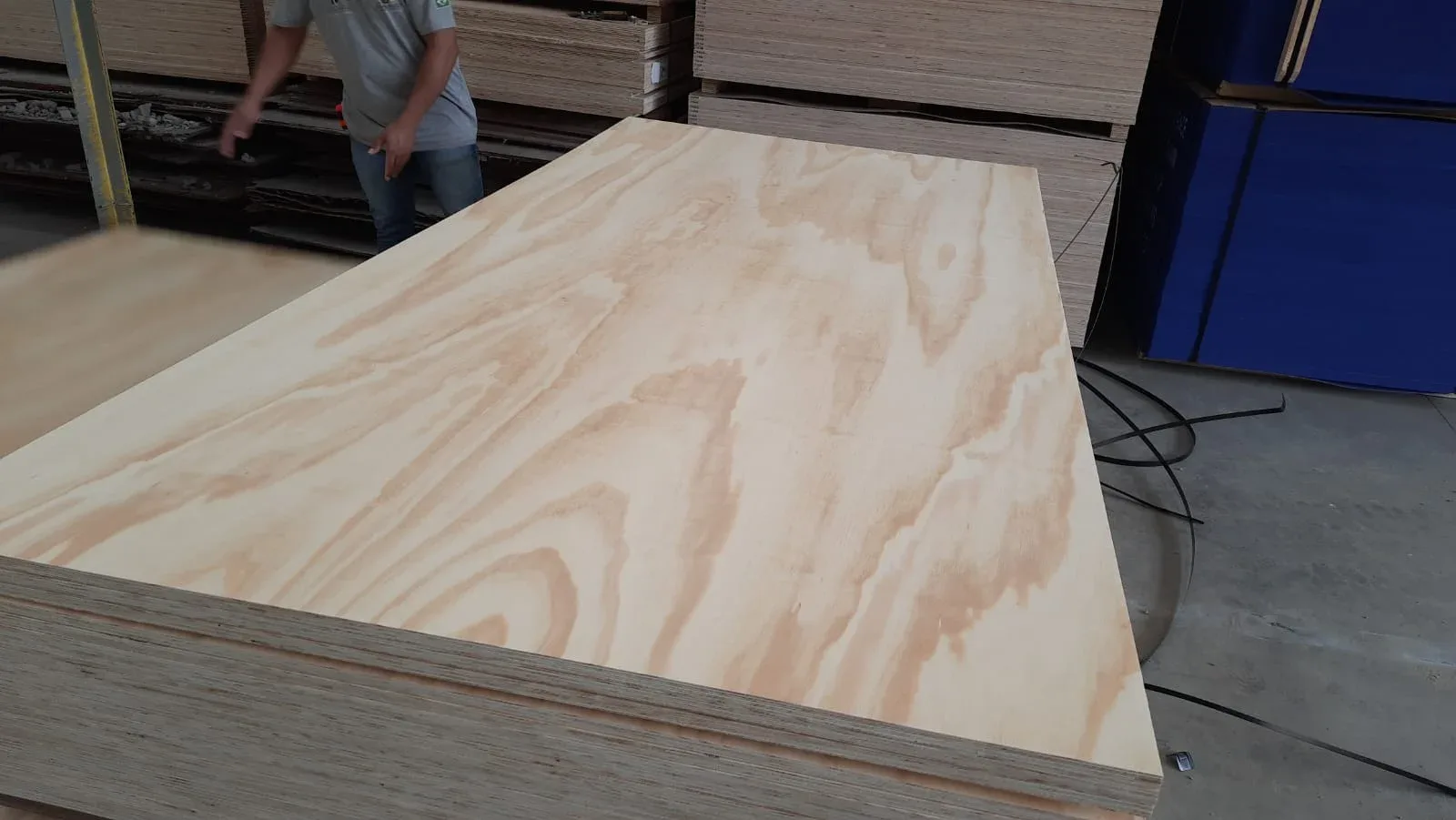
- Processed wood products (plywood, MDF, OSB, particleboard) — because the manufacturing process (heat, pressure, adhesive) kills any organisms
- Kiln-dried sawn timber that is shipped as the commodity itself (as opposed to packaging)
- Thin wood (less than 6mm thickness)
This is an important distinction: a shipment of pine plywood does not require ISPM 15 compliance on the plywood panels themselves. But if the plywood is loaded onto raw wooden pallets, those pallets must comply.
What are the approved treatments?
ISPM 15 approves two primary treatment methods:
HT — Heat Treatment Wood is heated to a core temperature of at least 56°C for 30 consecutive minutes in an approved kiln. This temperature kills insects, eggs, larvae, and most pathogens. Heat treatment is the most widely used method and is Export Brazil Pine's standard.
MB — Methyl Bromide Fumigation Methyl bromide gas is applied to the wood. This method is being phased out under the Montreal Protocol due to its ozone-depleting properties. Several countries — including the EU, UK, and Canada — no longer accept MB-treated materials. It is not recommended for European shipments.
DH — Dielectric Heating (radio frequency / microwave) An emerging method, less common in Brazil but approved under ISPM 15 revision.
The ISPM 15 mark
Treated materials must bear the official IPPC mark. It is a permanent mark branded (heat-stamped) directly onto the wood — not a label or sticker.
The mark contains four elements:
- Two-letter country code (BR for Brazil)
- Producer/treatment provider code — a number registered with Brazil's MAPA (Ministry of Agriculture)
- Treatment type (HT, MB, or DH)
- Wheat sheaf symbol — the IPPC logo
Example: [Wheat sheaf] BR-123 HT
Marks must appear on at least two opposite sides of each piece of treated wood. They must be legible and clearly visible without moving the cargo.
Which countries require ISPM 15?
As of 2026, over 180 IPPC member countries require ISPM 15 compliance for imported wooden packaging, including:
- All EU member states
- United Kingdom
- United States (regulated by USDA APHIS)
- Australia and New Zealand
- China, Japan, South Korea
- UAE, Saudi Arabia, Qatar
- Canada
A small number of countries have bilateral agreements with Brazil that modify requirements slightly. Your freight forwarder should confirm current requirements for your specific destination.
How Export Brazil Pine handles ISPM 15
All wooden packaging materials — pallets, crating, and dunnage — used on Export Brazil Pine shipments are:
- Heat-treated to the 56°C/30-minute standard
- Marked with the official IPPC BR mark from a MAPA-registered provider
- Accompanied by an ISPM 15 Heat Treatment Certificate issued by the treatment provider
This certificate is included in the standard shipping document package alongside the phytosanitary certificate, commercial invoice, packing list, bill of lading, and FSC transaction certificate.
Common importer mistakes
Assuming the plywood itself needs ISPM 15 certification. It does not. Processed wood products (plywood, MDF) are exempt. Only the raw wood packaging carries the requirement.
Accepting MB-treated materials for EU or UK shipments. Methyl bromide is no longer accepted in the EU or UK. Confirm that your supplier uses HT, not MB.
Not checking the mark at receipt. Customs spot-checks are random, but if an unmarked pallet is caught, the consequences fall on the importer. Check that marks are present and legible on arrival.
Reusing non-compliant pallets. If your local warehouse reuses old pallets for export, those pallets must themselves be ISPM 15 compliant if they will re-enter international trade.
Key takeaways
- ISPM 15 applies to wooden packaging, not to processed wood products like plywood or MDF
- Heat treatment (HT) is the accepted global standard — avoid MB for EU/UK destinations
- The IPPC mark must be branded directly on the wood, not labelled
- Export Brazil Pine provides the heat treatment certificate with every shipment
- When in doubt, ask your supplier for the MAPA registration number of their treatment provider
Request our full compliance document checklist through the inquiry form to see all certificates provided per shipment. Every EBP shipment includes a scanned copy of the ISPM 15 heat treatment certificate in the pre-departure document package — sent by email before the vessel departs so you can prepare your customs entry in advance.
Related reading
Kiln-Dried vs Green Timber: What Importers Need to Specify · How to Read a Timber Packing List · Sawn Wood · Pine Doors · Pine Mouldings
Planning your first FCL shipment?
We guide you from proforma invoice to port delivery.
Stay informed
New guides, specs & market updates
Join 400+ timber importers who get our monthly brief — no spam, unsubscribe anytime.
Contents
Continue your sourcing research
Get a quote
Ready to source Brazilian timber? We will send specifications, pricing and photos within 24 hours.
Request a quoteRelated resources