CE Marking for Plywood: EN 636 and EN 13986 Explained
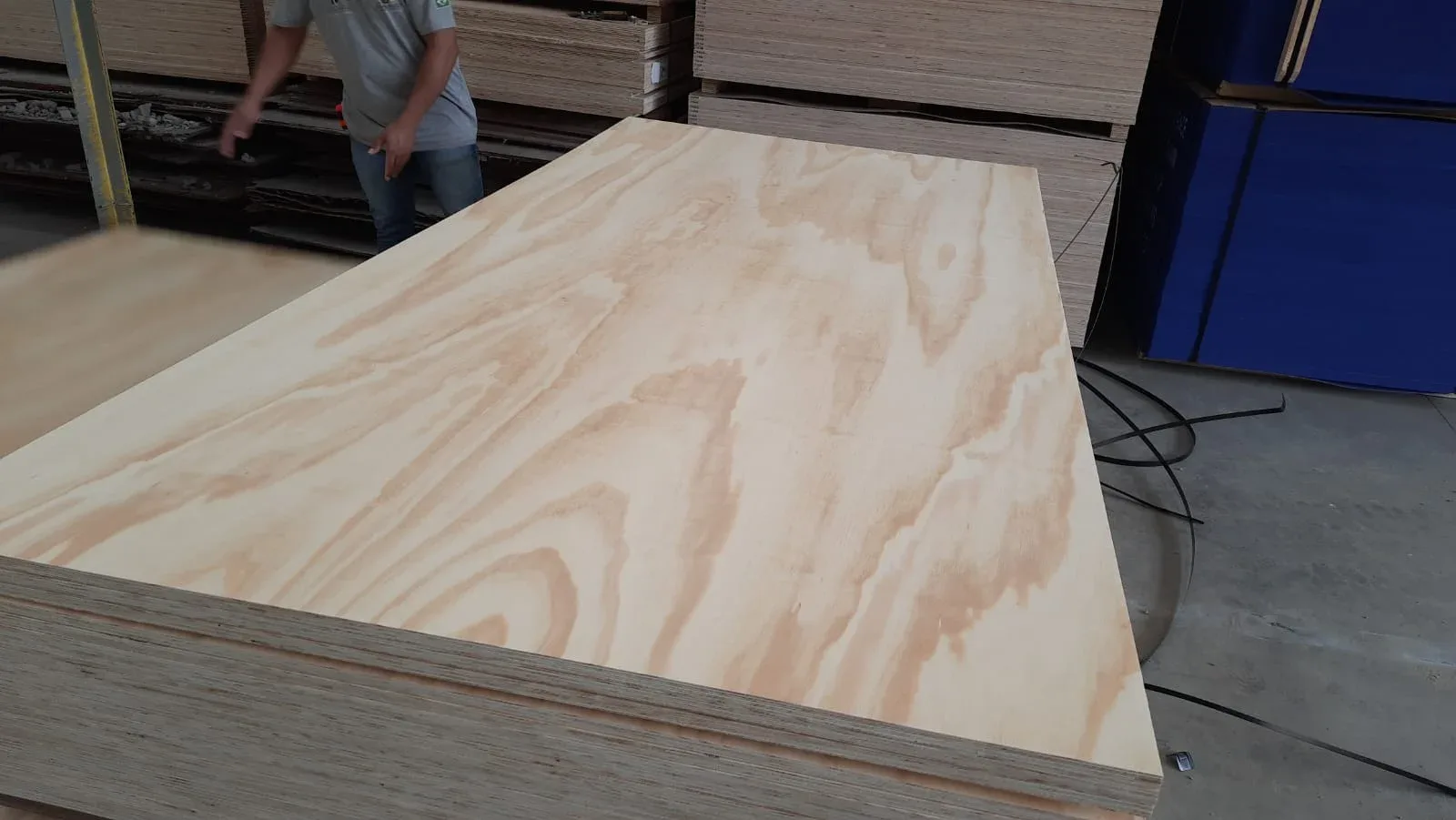
If you import plywood into the European Union or UK for use in construction, you are required to have CE-marked products with a Declaration of Performance (DoP). Selling non-CE-marked structural plywood in Europe is not legal.
Yet many importers — particularly those new to sourcing from Brazil — are unclear on what CE marking actually involves, which standards apply, and whether Brazilian pine plywood can qualify. This article answers those questions directly.
What is CE marking?
CE marking is a conformity mark that indicates a product meets the essential requirements of the relevant EU directives and harmonised standards. For construction products, the governing legislation is the EU Construction Products Regulation (CPR) — Regulation (EU) No 305/2011.
Under the CPR, any construction product covered by a harmonised European standard must have:
- A Declaration of Performance (DoP) — a document listing the product's declared performance against specific characteristics
- A CE mark affixed to the product or its packaging
The CE mark itself does not mean the product is "approved" or "tested." It means the manufacturer has assessed the product against the harmonised standard and documented its performance in the DoP.
Which standards apply to plywood?
EN 636 — Plywood — Specifications
EN 636 classifies plywood by use environment:
- EN 636-1: Dry conditions (service class 1 — protected interior use)
- EN 636-2: Humid conditions (service class 2 — covered exterior or interior with periodic moisture)
- EN 636-3: Exterior conditions (service class 3 — full exterior exposure)
Most structural pine plywood supplied by Export Brazil Pine meets EN 636-3, the most demanding classification, due to the WBP (phenol formaldehyde) glue bond used throughout production.
EN 13986 — Wood-based panels for use in construction — Characteristics, evaluation of conformity and marking
EN 13986 is the harmonised standard that triggers CE marking for wood-based panels. It defines the characteristics that must be declared in the DoP, including:
- Bending strength and modulus of elasticity
- Panel shear strength
- Formaldehyde emission class
- Moisture resistance / bond quality class
- Biological durability
- Reaction to fire (if declared)
- Thermal properties (if declared)
A product CE-marked under EN 13986 must also reference the applicable product standard — for plywood, that is EN 636.
What is a Declaration of Performance (DoP)?
The DoP is a formal document issued by the manufacturer (or their authorised representative) declaring the product's performance against each essential characteristic specified in EN 13986.
A DoP for pine plywood typically declares:
- Product name and type
- Intended use
- Manufacturer details and address
- EN 13986 as the harmonised standard
- EN 636 classification (e.g., EN 636-3)
- Formaldehyde emission class (E1, E0.5, or CARB P2)
- Structural performance data (bending strength, modulus, shear)
- Bond quality class (e.g., EN 314-2 Class 3 for WBP)
- Notified body number (if third-party assessed)
The DoP must be freely available to the distributor and end user. It is your obligation as the importer placing the product on the EU market to ensure the DoP exists and is accurate.
Who issues the DoP for imported plywood?
For products manufactured outside the EU, the CE marking obligation falls on the EU importer — the party placing the product on the European market for the first time.
In practice, there are two common arrangements:
Option 1: The Brazilian manufacturer is EU-assessed The manufacturer has undergone third-party testing and factory production control (FPC) auditing by a European Notified Body (such as PanEuro, Fiprec, or a similar body). The manufacturer issues the DoP and the CE mark. The importer uses it as-is.
Option 2: The EU importer takes responsibility The importer commissions independent testing from an EU-accredited laboratory, implements their own product control documentation, and issues the DoP under their own name. This is more complex and costly but gives the importer full control.
Export Brazil Pine's manufacturing partners have EN 636-3 declarations available. Importers can request the DoP and supporting test reports (SGS, BV, or Intertek) as part of the standard documentation package.
Formaldehyde and CE marking
One frequently misunderstood point: E1 or E0.5 formaldehyde classification is declared in the DoP under EN 13986. It is not a separate certification — it is one of the declared performance characteristics.
| Class | Max formaldehyde emission | Standard |
|---|---|---|
| E2 | ≤ 8 mg/m² per hour (perforator method) | Not CE-markable in EU since 2018 |
| E1 | ≤ 3.5 mg/m² per hour | Standard for EU construction use |
| E0.5 | ≤ 1.5 mg/m² per hour | Low-emission premium grade |
| CARB P2 | ≤ 0.05 ppm (chamber method) | US/California standard |
All pine plywood from Export Brazil Pine is supplied at E1 minimum, with E0.5 available on request (particularly for German and Scandinavian buyers who increasingly require it for interior applications).
EN 636 vs structural grading
EN 636 defines moisture resistance and manufacturing quality, not structural design values. For structural design calculations (Eurocode 5), you need the characteristic values from EN 12369-2 (for plywood), which specifies bending strength (fm,k), modulus of elasticity (E0,mean), shear modulus, and other structural parameters by panel thickness and species group.
Brazilian pine plywood is classified under the softwood plywood group in EN 12369-2. The characteristic values are lower than for birch plywood but are well-suited for most structural sheathing and flooring applications.
Practical checklist for EU importers
Before your first container arrives:
- Confirm the manufacturer has EN 636-2 or EN 636-3 certification (not just E1 — that alone is insufficient for CE marking)
- Request the Declaration of Performance and check it declares all required characteristics under EN 13986
- Verify formaldehyde class meets your market's requirements (E1 standard, E0.5 for premium buyers)
- Confirm the DoP references a Notified Body number if required for your system of assessment and verification of constancy of performance (AVCP)
- Ensure the CE mark and DoP language match the EU country of sale (DoP must be in the national language of the member state where the product is marketed)
Summary
- CE marking for plywood in the EU is governed by the CPR and harmonised standard EN 13986
- EN 636 classifies plywood by use class (1 = dry, 2 = humid, 3 = exterior); EN 636-3 is standard for structural applications
- The Declaration of Performance (DoP) is the core CE marking document — the importer is responsible for its accuracy
- Brazilian pine plywood with WBP bond and E1/E0.5 emission qualifies for EN 636-3 / CE marking
- Export Brazil Pine can supply DoP, test reports, and full compliance documentation on request
Related reading
E0/E1/E2 Formaldehyde Classes Explained · WBP vs MR Plywood Bond Types · EUDR and Brazilian Timber Imports · Pine Plywood
EUDR-ready timber from Brazil?
All shipments come with full geolocation documentation.
Stay informed
New guides, specs & market updates
Join 400+ timber importers who get our monthly brief — no spam, unsubscribe anytime.
Contents
Continue your sourcing research
Get a quote
Ready to source Brazilian timber? We will send specifications, pricing and photos within 24 hours.
Request a quote