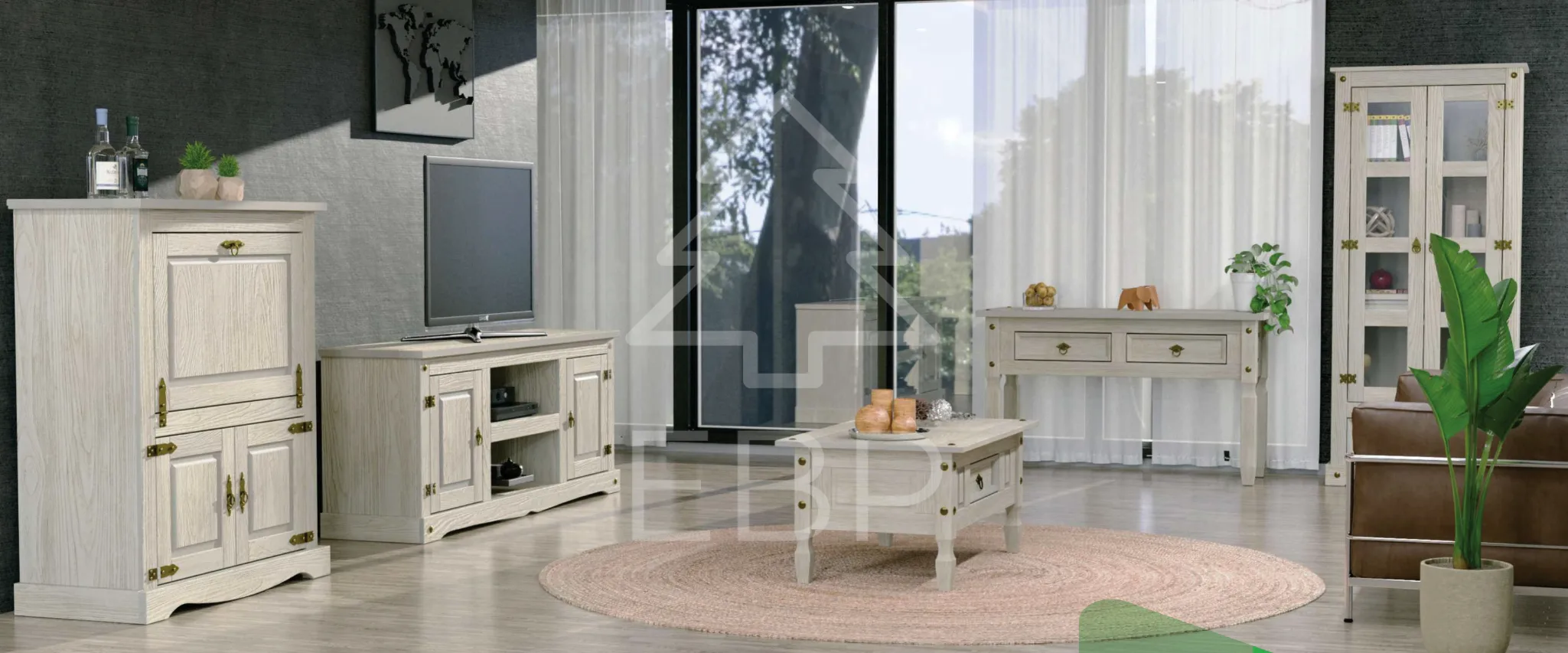
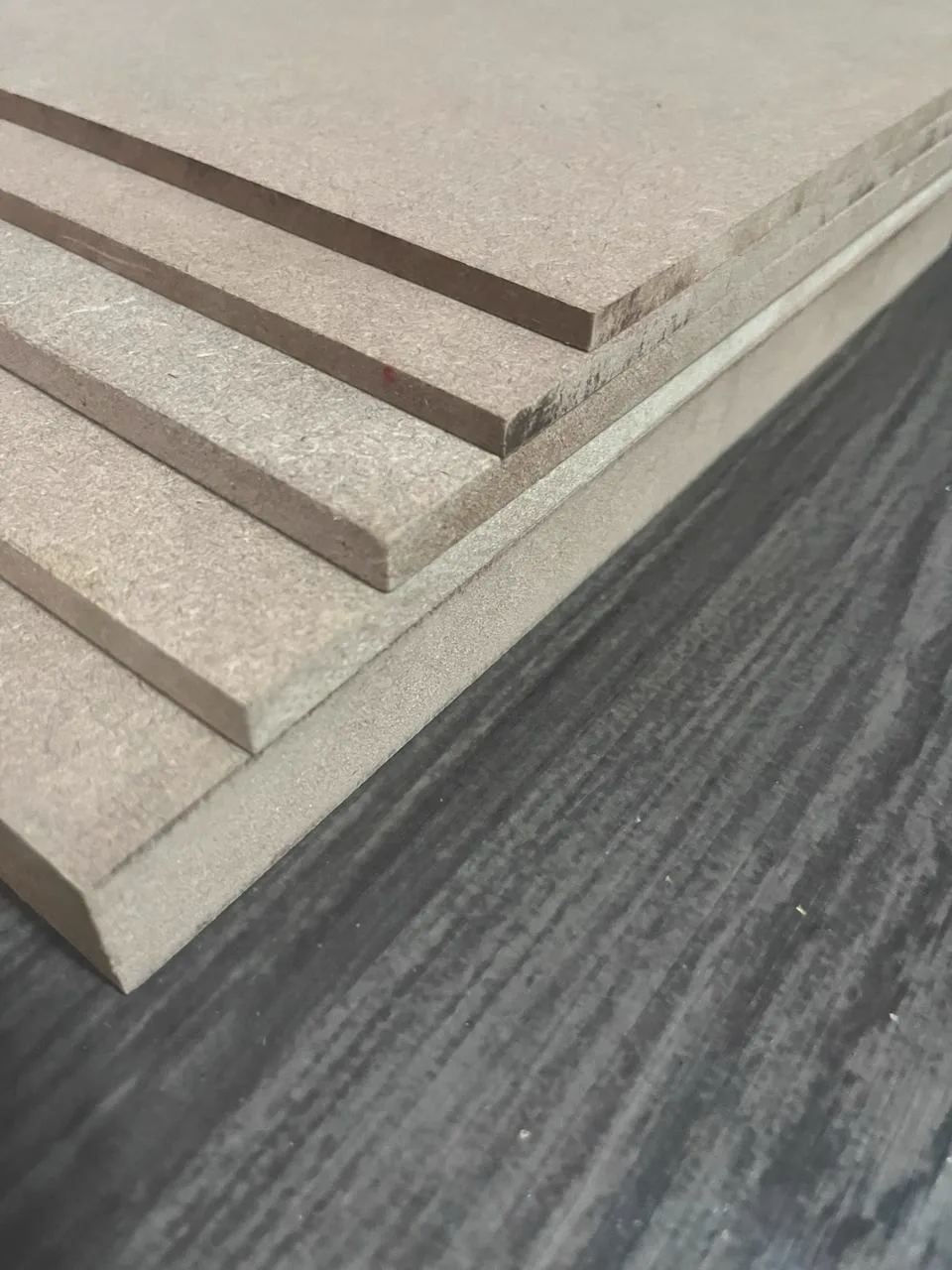
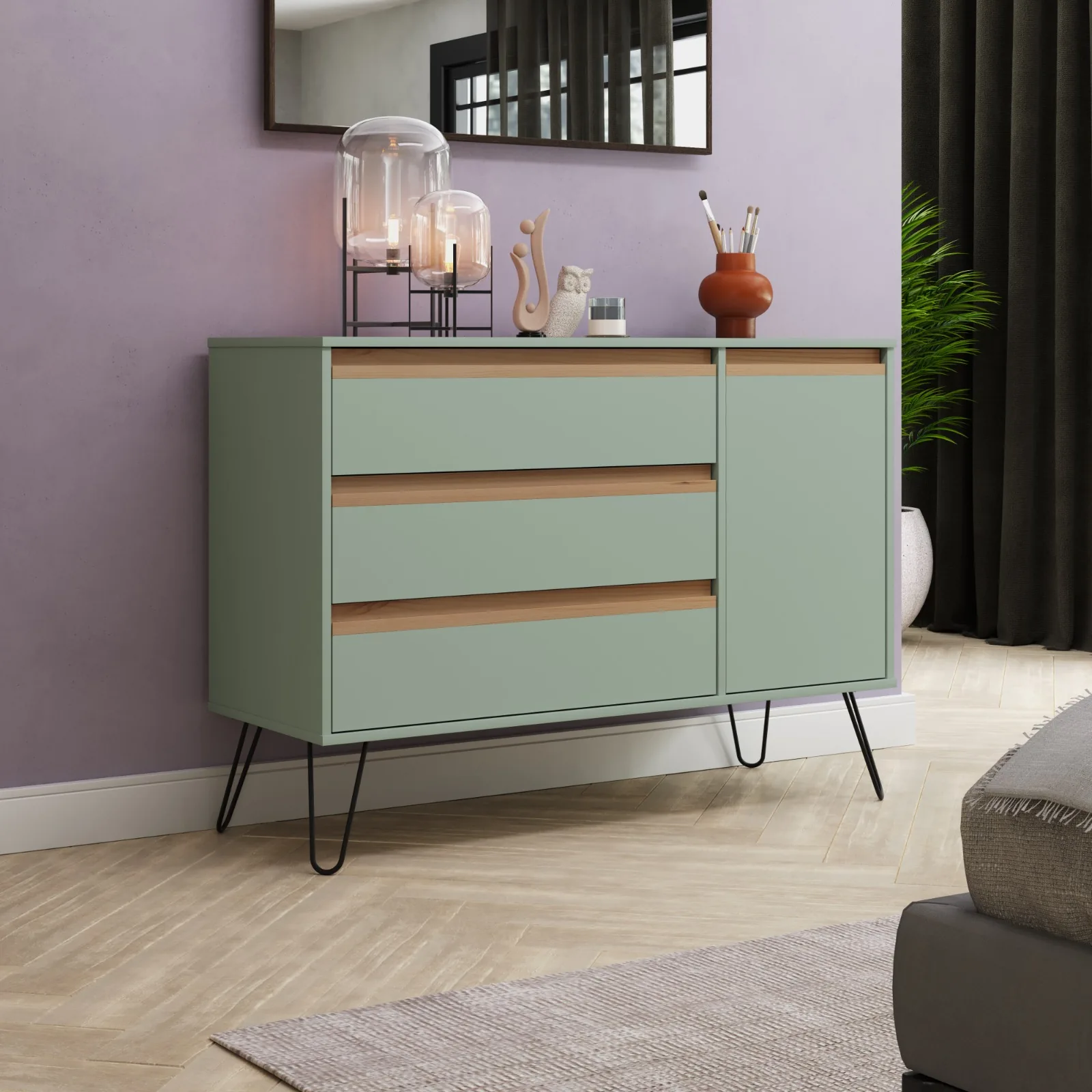
Edge-Glued Solid Wood Panels: Specification Guide
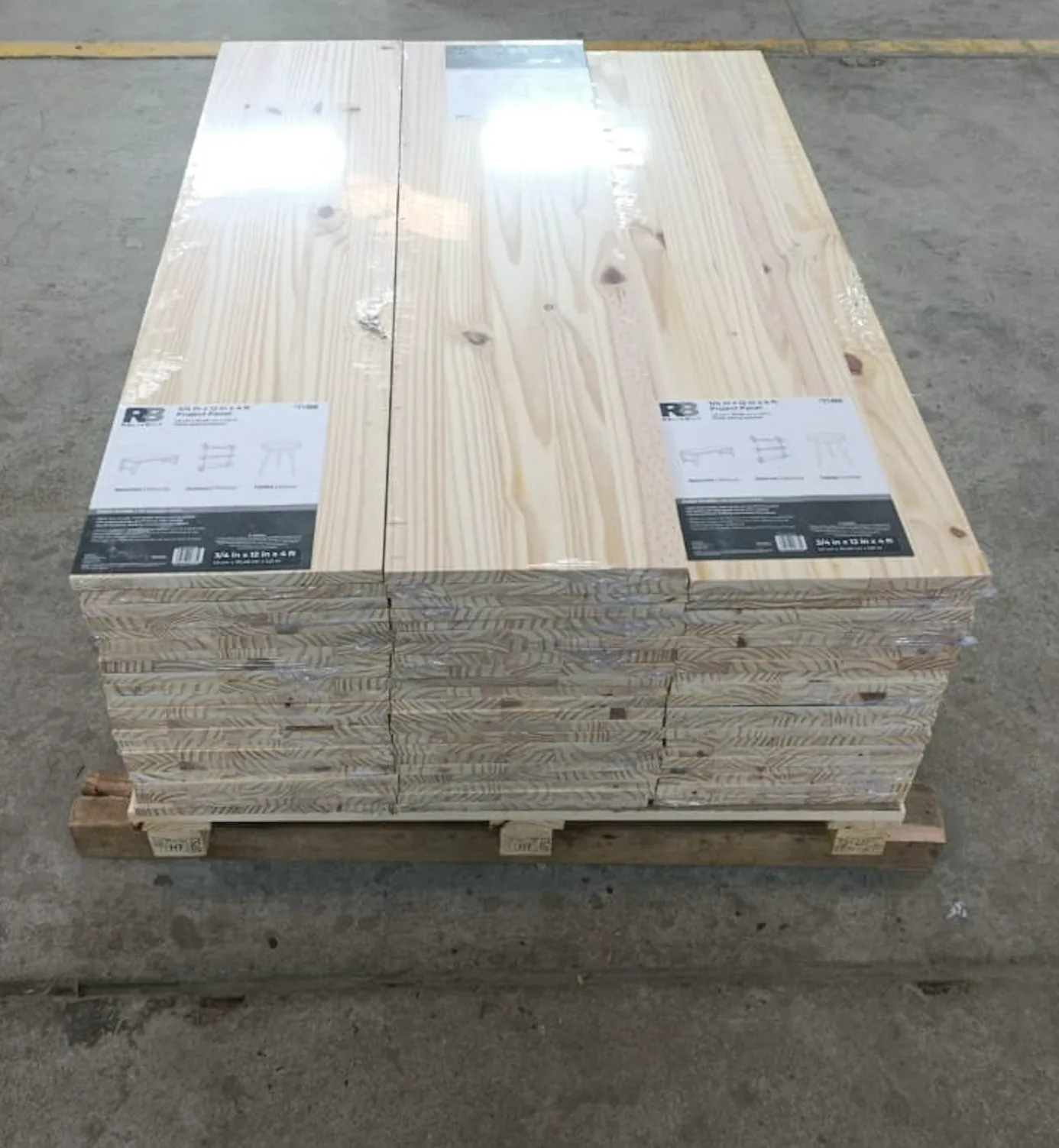
Edge-glued solid wood panels are the material of choice for furniture tops, shelving, countertops, stair treads, and interior joinery where the appearance and feel of real wood is required. Brazilian pine panels are manufactured to a consistently high standard and exported to furniture manufacturers across Europe, North America, and the Middle East.
What are edge-glued panels?
Edge-glued panels are made by joining solid wood boards side-by-side with high-quality adhesive to produce wide panels from narrower lumber. The grain runs along the length of the panel.
Two construction methods:
Solid (finger-joint free): Individual boards without finger joints. The most premium option — continuous grain, no visible joints in the thickness. Best for countertops, table tops and premium joinery.
Finger-jointed: Boards are joined end-to-end with finger joints before edge-gluing. Allows use of shorter lengths. Cost-efficient. Suitable for painted or opaque-finish applications.
Species available from Brazil
| Species | Common name | Characteristics |
|---|---|---|
| Pinus elliottii | Southern yellow pine (Brazil) | Pale cream, tight grain, excellent paint acceptance |
| Pinus taeda | Loblolly pine (Brazil) | Similar to elliottii, slightly softer |
| Tectona grandis | Plantation teak | Golden brown, Class 1 durability, premium hardwood |
Pine panels: the standard choice for furniture, joinery, and cost-sensitive applications. Teak panels: premium option for high-end furniture, outdoor applications, and decking.
Grades
A/B: Face side A-grade (clear or near-clear, minimal knots), back side B-grade. For premium furniture where both sides may be visible.
B/B: Both sides B-grade. Small sound knots acceptable. Standard for cabinet interiors, shelving.
B/C: Face B-grade, back C-grade. For applications where only one side is visible.
C/C: Both sides C-grade. Sound knots, some character. For painted applications, crating, packaging.
Standard dimensions
| Parameter | Pine panels | Teak panels |
|---|---|---|
| Thickness | 15mm–30mm | 18mm, 25mm, 38mm |
| Width | From 500mm (finger-joint); custom | Up to 1000mm |
| Length | Up to 3000mm (finger-joint); up to 2440mm (solid) | Up to 2440mm |
| Surface | S2S (sanded both sides) on A/B, B/B | Sanded to 120-grit |
| Moisture content | 8–12% (A/B, B/B); 8–15% (B/C) | 8–12% |
Why moisture content matters
Panels destined for Europe or North America should arrive at 8–12% MC. Higher moisture content causes dimensional movement after installation — panels will shrink as they acclimatise to indoor conditions, potentially opening gaps in furniture.
All EBP pine panels are kiln-dried to 8–12% MC before shipment. Moisture content is verified at the mill and documented on the quality certificate.
What to specify when ordering
- Species: Pinus elliottii/taeda or Teak
- Grade: A/B, B/B, B/C, C/C
- Construction: Solid or finger-jointed
- Thickness: in mm
- Width range: minimum and maximum acceptable
- Length: maximum acceptable
- Surface: S2S (sanded both sides) or S1S
- Moisture content target: 8–12% or 8–15%
- Certifications required: FSC, E1
Common applications
| Application | Grade | Construction | Thickness |
|---|---|---|---|
| Table tops and desk surfaces | A/B | Solid | 25–30mm |
| Cabinet doors and panels | A/B, B/B | Solid or finger-jointed | 18–20mm |
| Interior shelving | B/B | Finger-jointed | 18–25mm |
| Stair treads | B/B | Solid | 38–40mm |
| Window boards and sills | A/B | Solid | 20–25mm |
| Furniture components (painted) | B/C | Finger-jointed | 15–18mm |
| Packaging and crating panels | C/C | Finger-jointed | 15–18mm |
Certifications and compliance
FSC Chain of Custody: Available on request. EBP provides an FSC Transaction Certificate per shipment for FSC-certified orders — relevant for EU buyers under EUDR requirements and for retailers with FSC-sourcing policies.
E1 formaldehyde: Edge-glued panels use PVA or MUF adhesive in the edge joints. Panels comply with E1 class (≤1.5 mg/m³ air, EN 717-1 chamber method) for EU interior applications as standard.
EUDR documentation: Full package for EU-bound shipments — plantation geolocation data, IBAMA export documentation, FSC Transaction Certificate, and due diligence declaration.
ISPM 15: All wooden packaging (pallets, crating) complies with ISPM 15 heat treatment requirements. Certificate included with every shipment.
Importing edge-glued panels: logistics
Container capacity: A 40'HC holds approximately 12–18m³ of edge-glued panels depending on dimensions and bundle configuration. Our export team provides exact CBM calculation for your specification.
Lead time: 4–6 weeks production + 18–25 days transit to European ports (Rotterdam, Hamburg); 14–18 days to US East Coast.
Packaging: Panels are bundled and wrapped in polyethylene film for moisture protection, steel-strapped, and loaded on ISPM 15-compliant pallets.
Handling on arrival: Store horizontally on level bearers in a covered warehouse. Allow 48–72 hours acclimatisation before machining.
How to write a complete specification
A well-written order specification prevents revision delays and grade substitutions:
Pinus elliottii/taeda edge-glued solid wood panels, A/B grade, finger-jointed construction, 18mm thickness, 300–600mm width, max 2440mm length, S2S sanded to 100-grit, moisture content 8–12% MC at time of loading, E1 formaldehyde class, FSC certified, ISPM 15 compliant packaging, 2.0 m³ per bundle.
Include: species, grade, construction type, thickness, width range, length limit, surface finish, MC target, formaldehyde class, certification requirements, and bundle size.
Frequently asked questions
Can I mix species on one container? Yes — pine and teak panels can ship on the same container with a combined packing list. Phytosanitary documentation covers all wood in the container.
What is the typical width range for finger-jointed panels? Most finger-jointed pine panels are produced in random widths between 80–180mm per board, edge-glued to produce panels in the 200–1200mm finished width range. Specify your minimum and maximum acceptable finished panel width at time of order.
Are panels supplied pre-sanded? A/B and B/B grades are supplied S2S (sanded both sides) to a standard of 100–120-grit as standard. B/C and C/C grades are sanded on the face side only (S1S) or supplied unsanded — confirm at order.
What glue is used in the edge joints? Standard is PVA (polyvinyl acetate) for interior applications. MUF (melamine-urea formaldehyde) is used for moisture-resistant applications. Both comply with E1 formaldehyde class. Specify if your application is moisture-exposed.
Do you supply pre-primed panels? No — panels are supplied bare wood. Priming at origin is not standard practice for export product.
Related reading
Plywood vs MDF for Furniture Manufacturing · How to Verify FSC Certification from Brazil · Solid Wood Panels · Teak Panels
Importing pine furniture?
B2B wholesale furniture direct from Brazilian mills.
Stay informed
New guides, specs & market updates
Join 400+ timber importers who get our monthly brief — no spam, unsubscribe anytime.
Contents
Continue your sourcing research
Get a quote
Ready to source Brazilian timber? We will send specifications, pricing and photos within 24 hours.
Request a quoteRelated resources