Plywood vs MDF for Furniture Manufacturing: Importer Guide
Furniture manufacturers sourcing panels from Brazil face this choice on almost every project: pine plywood or MDF? Both are available, both are FSC-certified, both ship in standard containers. The right answer depends on the application.
What they are
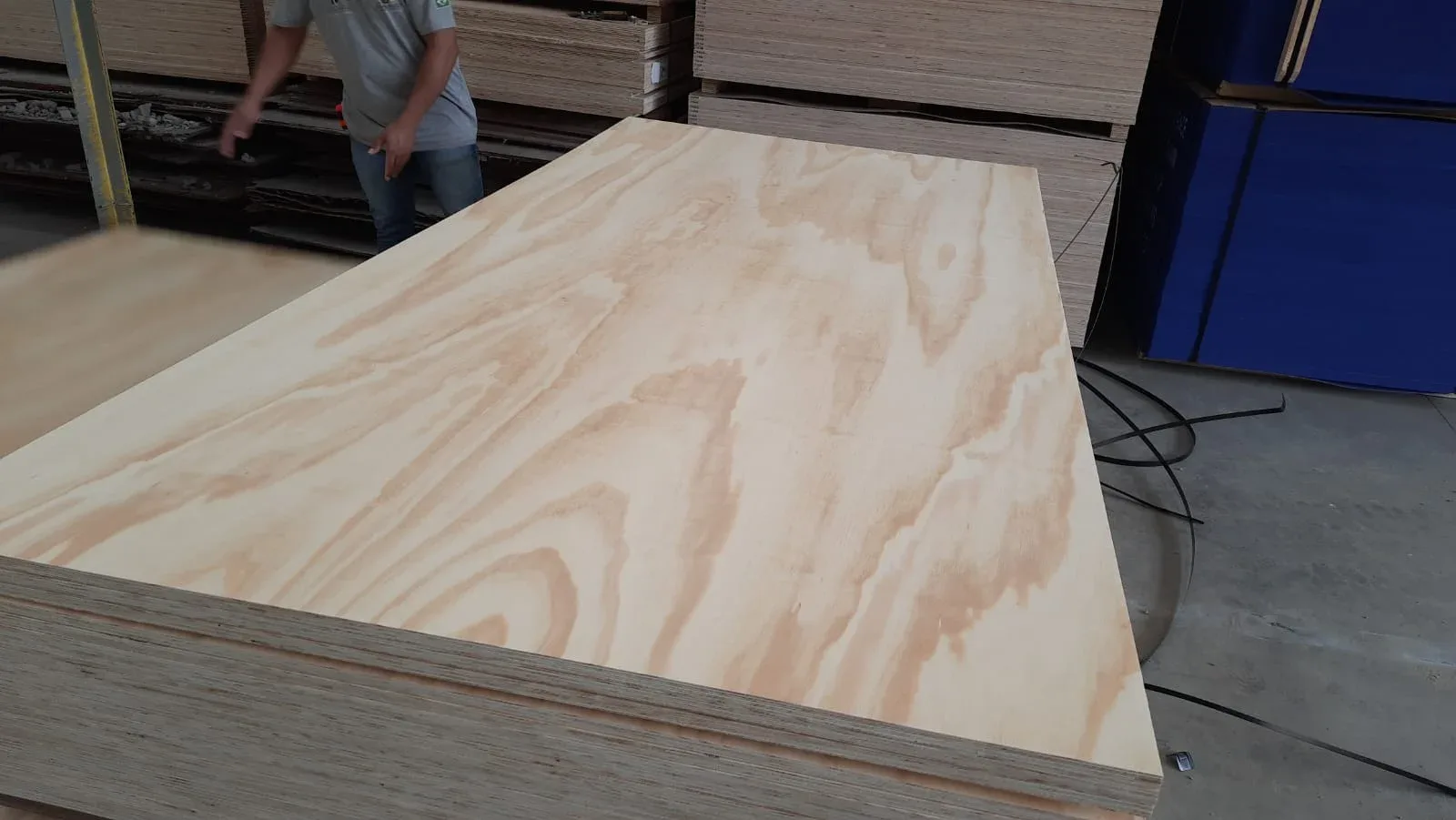
Pine plywood is made from cross-banded layers (veneers) of Pinus elliottii or Pinus taeda, bonded under heat and pressure. The cross-grain construction gives it strength in both directions.
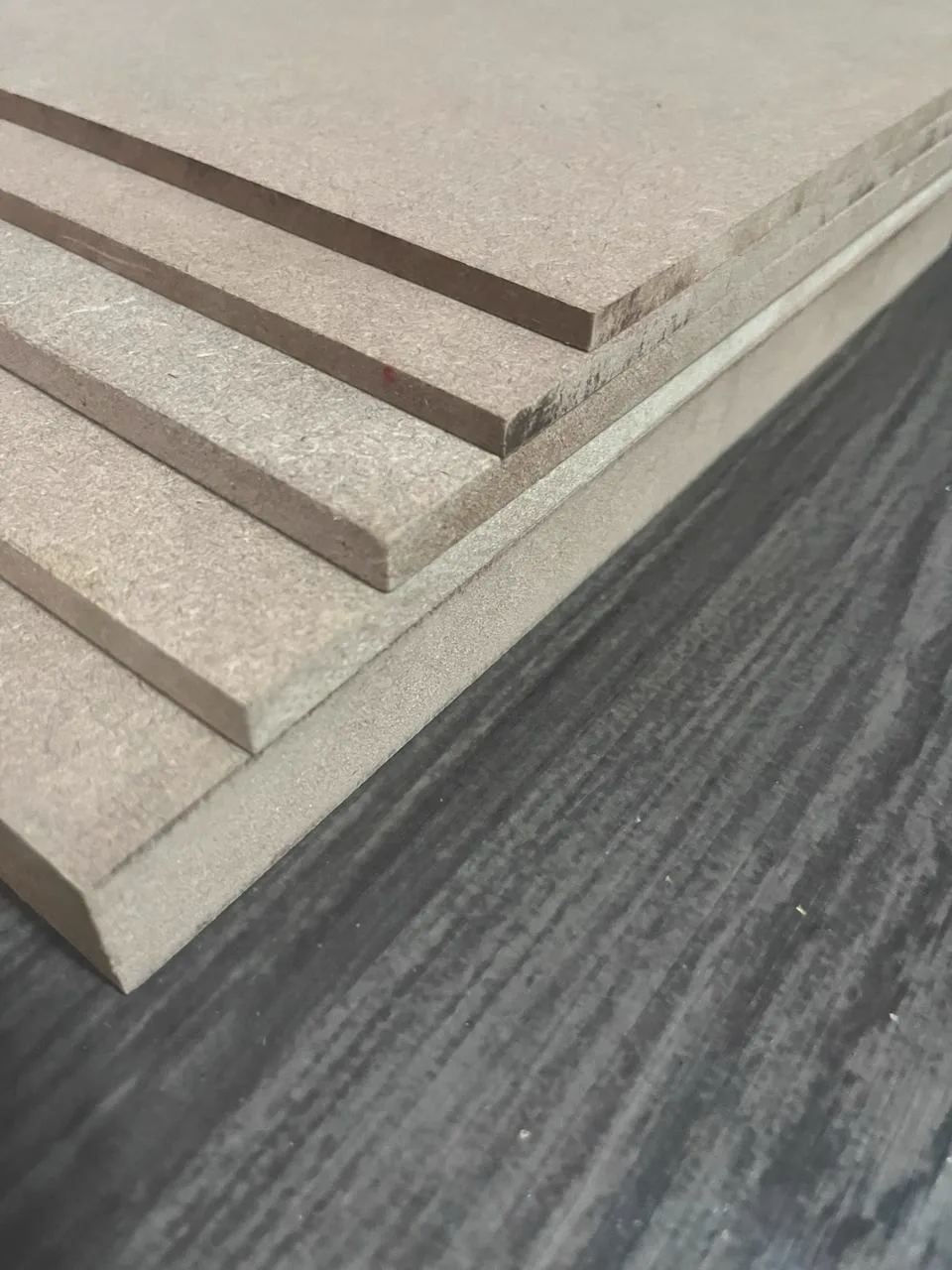
MDF (Medium Density Fibreboard) is made from wood fibres broken down and reconstituted with resin under heat and pressure. The result is a homogeneous, dense panel with no grain direction.
Head-to-head comparison
| Property | Pine Plywood | MDF |
|---|---|---|
| Structural strength | High — cross-grain resists splitting | Moderate — no grain, can sag under load |
| Screw holding (face) | Good | Moderate |
| Screw holding (edge) | Good | Poor — edges crumble |
| Moisture resistance | WBP bond = exterior rated | Standard MDF = interior only; MR grade = humid |
| Weight (18mm) | ~11 kg/sheet | ~15–17 kg/sheet |
| Surface smoothness | Good (sanded grades) | Excellent — zero grain |
| Paint finish | Good | Excellent — no telegraphing |
| CNC routing | Good | Excellent — consistent density |
| Edge profile (routed) | Good (solid wood edge quality) | Very good — smooth, paintable |
| Formaldehyde | E1 standard (WBP) | E0/E1/E2 — specify at order |
| Cost per m³ | Higher | Lower |
When to choose plywood
- Structural components: cabinet carcasses, drawer bases, shelves carrying load
- Moisture-exposed areas: kitchen carcasses, bathroom vanities (use WBP grade)
- Flat-pack furniture: better screw retention for repeated assembly
- Large furniture: lighter weight than MDF reduces shipping cost per unit
- Backs and sides of wardrobes, cabinets
When to choose MDF
- Flat, paintable surfaces: doors, drawer fronts, decorative panels
- CNC-routed profiles: consistent cutting without grain tear-out
- Veneered panels: MDF substrate holds veneer flat without telegraphing
- Lacquered finishes: invisible grain = cleaner finish
- Cost-sensitive components: MDF is typically 15–25% cheaper per m² than plywood
The practical answer for importers
Most furniture manufacturers use both — plywood for structural carcasses, MDF for visible, flat, painted surfaces. The most efficient approach is to source both products from a single supplier on a consolidated FCL, which Export Brazil Pine can arrange.
What EBP supplies
Plywood: A/B, B/B, B/C, C/C grades — all WBP, E1, FSC available. Sheet sizes 1220×2440mm and 1250×2500mm, 9–30mm.
MDF: Standard, Moisture Resistant (green core), Fire Retardant Class B1. Thicknesses 2.5–33mm. CARB P2 and E1 certified.
Compliance: what markets require
Getting the compliance specification right is as important as the technical specification — especially for furniture manufacturers exporting to regulated markets.
| Market | Formaldehyde requirement | Sustainability |
|---|---|---|
| EU interior furniture | E1 minimum (EN 717-1 chamber method) | EUDR documentation required |
| EU premium / Scandinavia | E0.5 preferred | FSC CoC often required |
| USA | CARB P2 / TSCA Title VI | No EUDR, but CARB certificate required |
| UK | E1 (retained EU standard) | EUTR equivalent compliance |
| Australia | E1 equivalent (AS/NZS 4266) | ISPM 15 for solid wood |
EBP supplies both plywood and MDF with E1 certification as standard. E0.5 is available on request for specific orders. CARB P2 certification is available on US-destined product.
Importing plywood and MDF together on one FCL
Most furniture manufacturers use both products. Shipping them on a single consolidated FCL reduces freight cost per m³ compared to two separate half-filled containers.
A typical mixed-load 40'HC might carry:
- 400–500 sheets of 18mm plywood (structural grades)
- 200–300 sheets of 18mm MDF (standard or MR)
Both products require the same base documentation (invoice, packing list, B/L, Certificate of Origin, phytosanitary certificate). No additional complexity arises from mixing on the same container. EBP coordinates single-container mixed orders as standard.
Lead times and logistics
| Route | Transit time (from Paranaguá) |
|---|---|
| Rotterdam / Hamburg | 18–22 days |
| UK (Felixstowe) | 20–24 days |
| New York / Baltimore | 14–18 days |
| Jebel Ali (UAE) | 22–28 days |
Production lead time: 4–8 weeks depending on grade and volume. Combined production + transit: typically 7–12 weeks from order confirmation to arrival.
Common questions from furniture manufacturers
Can I mix grades on one order? Yes — a single proforma can include multiple grades and thicknesses of both plywood and MDF. Our export team prepares a consolidated packing list.
Are sheet sizes compatible with European CNC tables? Standard 1220×2440mm and 1250×2500mm sheets are compatible with all major European CNC format sizes.
Do you supply pre-cut panels? We supply full sheets only. Cutting to size is handled by the importer or a local converter.
Handling and storage on arrival
Both plywood and MDF are moisture-sensitive before finishing. On arrival at your warehouse:
- Store flat on level bearers — never on edge; panels will bow within days if stored vertically
- Keep off concrete floors — place on timber or plastic bearers to prevent moisture absorption from the ground
- Maintain warehouse humidity between 45–65% RH; MDF is more sensitive to humidity variation than plywood
- Allow panels to acclimatise to workshop humidity for 24–48 hours before machining, especially if the container arrived from a significantly different climate
MDF panels will swell irreversibly if edges contact water. Seal all cut MDF edges with edge banding, paint, or sealant before the panel enters a humid environment. Plywood edges are more tolerant — WBP-bonded panels resist delamination even after edge wetting — but sealing is still recommended for long-term durability in kitchen and bathroom applications.
Related reading
Plywood Grades Explained · E0.5, E1 and E2 Formaldehyde · Brazilian Pine Furniture for European Retailers · Solid Wood Panels · MDF Panels
Sourcing pine plywood?
Get CDX, A/B, Film Face, and T1-11 specs + pricing in 24 h.
Stay informed
New guides, specs & market updates
Join 400+ timber importers who get our monthly brief — no spam, unsubscribe anytime.
Contents
Continue your sourcing research
Get a quote
Ready to source Brazilian timber? We will send specifications, pricing and photos within 24 hours.
Request a quoteRelated resources