E0.5, E1 and E2 Formaldehyde in Plywood: EU Importer Guide
Formaldehyde emission class is a mandatory specification for plywood and MDF sold into most European markets — and increasingly into other regulated markets worldwide. Getting it wrong means product rejection at customs, retailer returns, or regulatory fines.
This article explains the difference between E0.5, E1 and E2, what test methods apply, and what to request when ordering Brazilian pine plywood or MDF.
The emission classes
| Class | Limit (EN 717-1 chamber method) | Typical application |
|---|---|---|
| E0.5 | ≤0.5 mg/m³ air | Premium EU interior, Scandinavian markets |
| E1 | ≤1.5 mg/m³ air | Standard EU interior — most common |
| E2 | ≤5.0 mg/m³ air | Industrial/outdoor only — not for interior use |
The old E0 class (≤0.12 mg/L perforator method) has largely been replaced by E0.5 under the revised EN ISO 12460 test standards. When suppliers refer to "E0," they typically mean ≤0.5 mg/m³ air under the new method.
Test methods: chamber vs perforator
You will encounter two test methods in documentation:
EN 717-1 (gas analysis / chamber method) — The current EU standard. Results in mg/m³ of air. Used for CE marking and most European trade.
EN 120 (perforator method) — Older method giving results in mg/100g dry board. Still used in some markets and by some suppliers. Not directly comparable to chamber results.
When reviewing certificates, confirm which method was used. A result of "0.5 mg/100g" (perforator) is not the same as "0.5 mg/m³" (chamber).
Which class does your market require?
| Market | Required class | Notes |
|---|---|---|
| EU (general interior) | E1 | Mandatory under EN 13986 for CE marking |
| Germany (BlueAngel) | E0.5 | Stricter voluntary scheme for "premium" products |
| Scandinavia | E0.5 | Retailer policies often demand this |
| UK (post-Brexit) | E1 | Retained EU standards |
| USA | CARB P2 | Separate standard — see CARB P2 article |
| Australia | E1 equivalent | AS/NZS 4266 |
| Middle East | E1 or none | Varies by country and end use |
What Export Brazil Pine supplies
Pine plywood (all appearance grades — A/B, B/B, B/C, A/C): E1 as standard. E0.5 available on request for specific orders (may affect lead time and price).
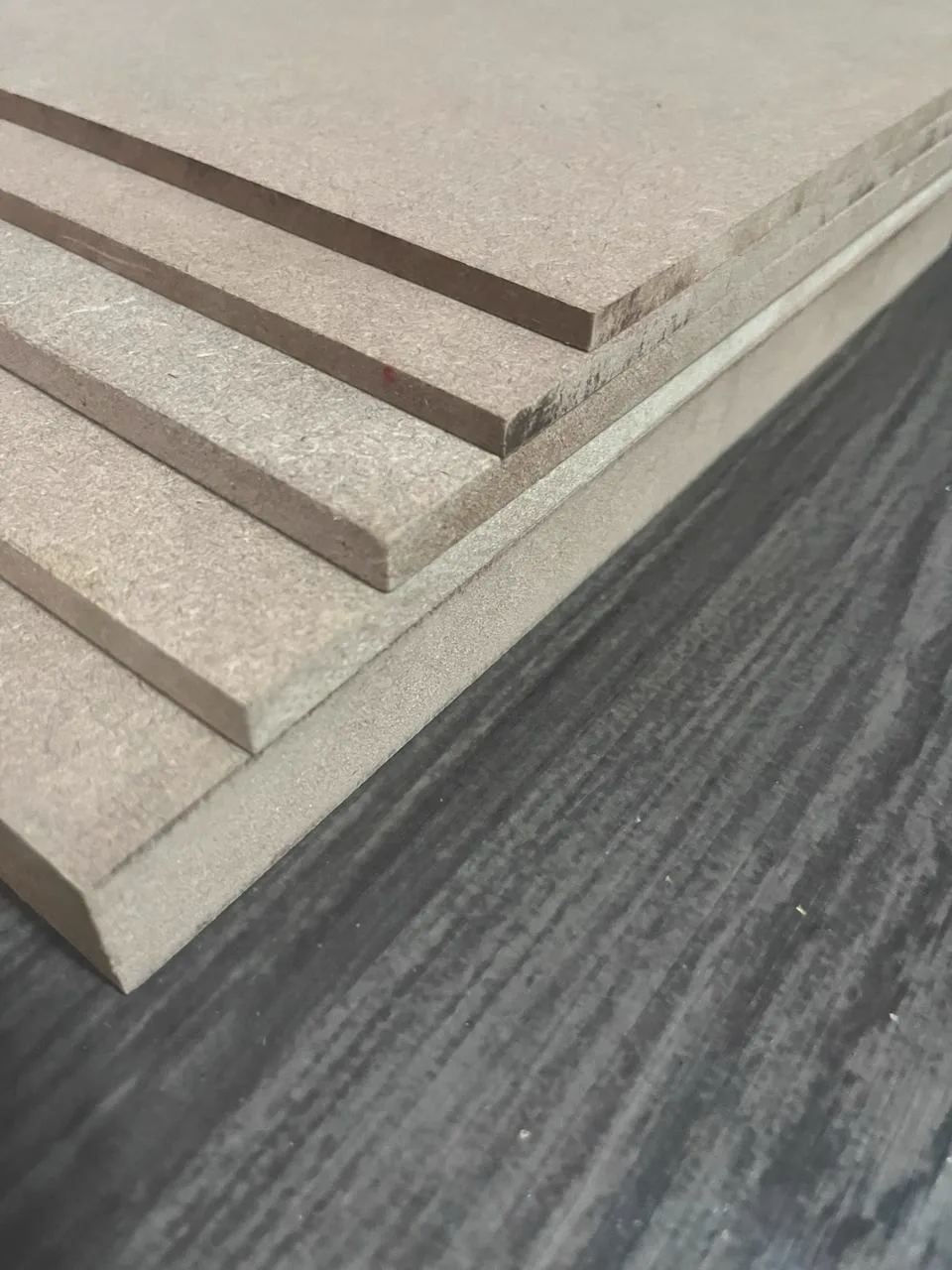
MDF panels:
- Standard MDF: E0 / E1 / E2 available — confirm at order
- Moisture Resistant (MR) MDF: E1 as standard, CARB P2 available
- Fire Retardant MDF: E1 as standard
Certificates provided: Third-party lab test reports (SGS, Bureau Veritas, or Intertek) confirming the emission class are included with every order. CE Declaration of Performance (DoP) available for EU-destined product on request.
How to specify correctly
When placing an order, state:
- The emission class required: E0.5 or E1
- The test method: EN 717-1 (chamber) preferred
- The certifier: SGS, BV, or Intertek acceptable
- Whether CE marking documentation is needed
Why formaldehyde limits matter for interior applications
Formaldehyde is a volatile organic compound (VOC) emitted from the urea-formaldehyde (UF) resins used in standard composite wood panel production. In enclosed spaces with poor ventilation — offices, apartments, fitted wardrobes — accumulated emissions can exceed WHO indoor air quality thresholds.
This is the reason EU and US regulators introduced binding emission class standards. Furniture manufacturers, kitchen cabinet producers, and fit-out contractors selling to the EU or US market cannot use uncertified panels without exposing themselves to liability and regulatory risk.
For importers, the practical implication is straightforward: always confirm the emission class before ordering, and retain the test report with your shipment documentation.
E1 vs E0.5: the real-world difference
For most commercial furniture and joinery applications, E1 is sufficient. It is the standard EU interior requirement and covers the vast majority of B2B use cases: furniture panels, cabinet carcasses, shelving, wall panelling, flooring substrates.
E0.5 is required or strongly preferred when:
- Your customer has a specific written requirement (common in Scandinavian retail chains)
- The product carries a Blue Angel (Der Blaue Engel) eco-label
- The product is for a certified green building project (BREEAM Excellent/Outstanding, LEED, WELL)
- The end use is children's furniture or education/healthcare environments
E0.5 panels typically carry a 5–10% price premium over E1 and may require 1–2 weeks additional lead time due to specialized resin batches.
How to read a formaldehyde test certificate
When reviewing a supplier's formaldehyde test report, check these fields:
- Test method — must be EN 717-1 (chamber) for EU compliance; reject perforator-only reports for EU trade
- Test date — should be within the last 12 months; ask for a current report if older
- Test result — must be at or below the class limit (E1: ≤1.5 mg/m³; E0.5: ≤0.5 mg/m³)
- Laboratory accreditation — the lab should be accredited under ISO/IEC 17025; recognised names include SGS, Bureau Veritas, Intertek, TÜV Rheinland
- Product description — confirm the tested product matches your order (same species, core construction, thickness range)
Formaldehyde class and glue bond: two separate specifications
A common point of confusion: E1 formaldehyde class and WBP glue bond are different properties. A panel can be E1 and WBP simultaneously — and usually should be for exterior or moisture-exposed applications.
- Formaldehyde class (E0.5, E1, E2) — measures volatile formaldehyde emissions from the cured adhesive into room air
- WBP (Weather and Boil Proof) — measures the structural integrity of the glue bond when exposed to water; it does not relate to formaldehyde emissions
Exterior-rated panels are WBP by definition, but they still require an E-class specification for EU trade. Always specify both: e.g. "E1, WBP bond" for standard EU exterior plywood, or "E0.5, WBP" for premium interior applications where the phenolic adhesive used in WBP bond also tends to produce lower formaldehyde emissions.
Related reading
WBP vs MR Plywood · CARB P2 Pine Plywood for US Importers · EUDR-Compliant Plywood from Brazil · Pine Plywood · MDF Panels
EUDR-ready timber from Brazil?
All shipments come with full geolocation documentation.
Stay informed
New guides, specs & market updates
Join 400+ timber importers who get our monthly brief — no spam, unsubscribe anytime.
Contents
Continue your sourcing research
Get a quote
Ready to source Brazilian timber? We will send specifications, pricing and photos within 24 hours.
Request a quoteRelated resources