How to Read a Brazilian Timber Packing List
The packing list is one of the most important documents in a timber import shipment. It is the reference point for customs clearance, freight rate calculation, inventory receiving, and invoice verification. Yet many importers — particularly those new to timber — struggle to read them accurately.
This guide explains each element of a typical Brazilian pine plywood and sawn timber packing list, how volumes are calculated, and what errors to catch before you confirm the shipment.
Why packing lists matter
The packing list serves multiple functions:
- Customs: The customs value declaration and HS code classification are based on packing list quantities
- Freight: Ocean freight for timber is typically quoted per CBM (cubic metre) — the packing list is the basis for the freight invoice
- Receiving: Your warehouse team uses the packing list to verify the incoming delivery against what was ordered
- Insurance: The insured value is based on the declared quantities and unit values
An error in the packing list — a missing bundle, a wrong dimension, a CBM miscalculation — can cascade into invoice discrepancies, customs issues, and receiving shortfalls.
Structure of a Brazilian timber packing list
A typical Brazilian timber packing list will have the following main sections:
Header information:
- Shipper (exporter) name, address, CNPJ
- Consignee (importer) name, address
- Invoice number and date
- Container number(s) and seal number(s)
- Vessel name and voyage
- Port of loading / port of discharge
- Country of origin: Brazil
Line items — one row per product/dimension/grade combination:
- Item number
- Product description (e.g., "Pine Plywood B/B WBP E1")
- Dimensions (thickness × width × length in mm)
- Number of sheets (for panels) or pieces (for sawn wood)
- Number of packages / bundles
- Unit of measure
- Gross weight (kg) and net weight (kg)
- Volume (CBM)
Totals:
- Total packages
- Total gross weight (kg)
- Total net weight (kg)
- Total volume (CBM)
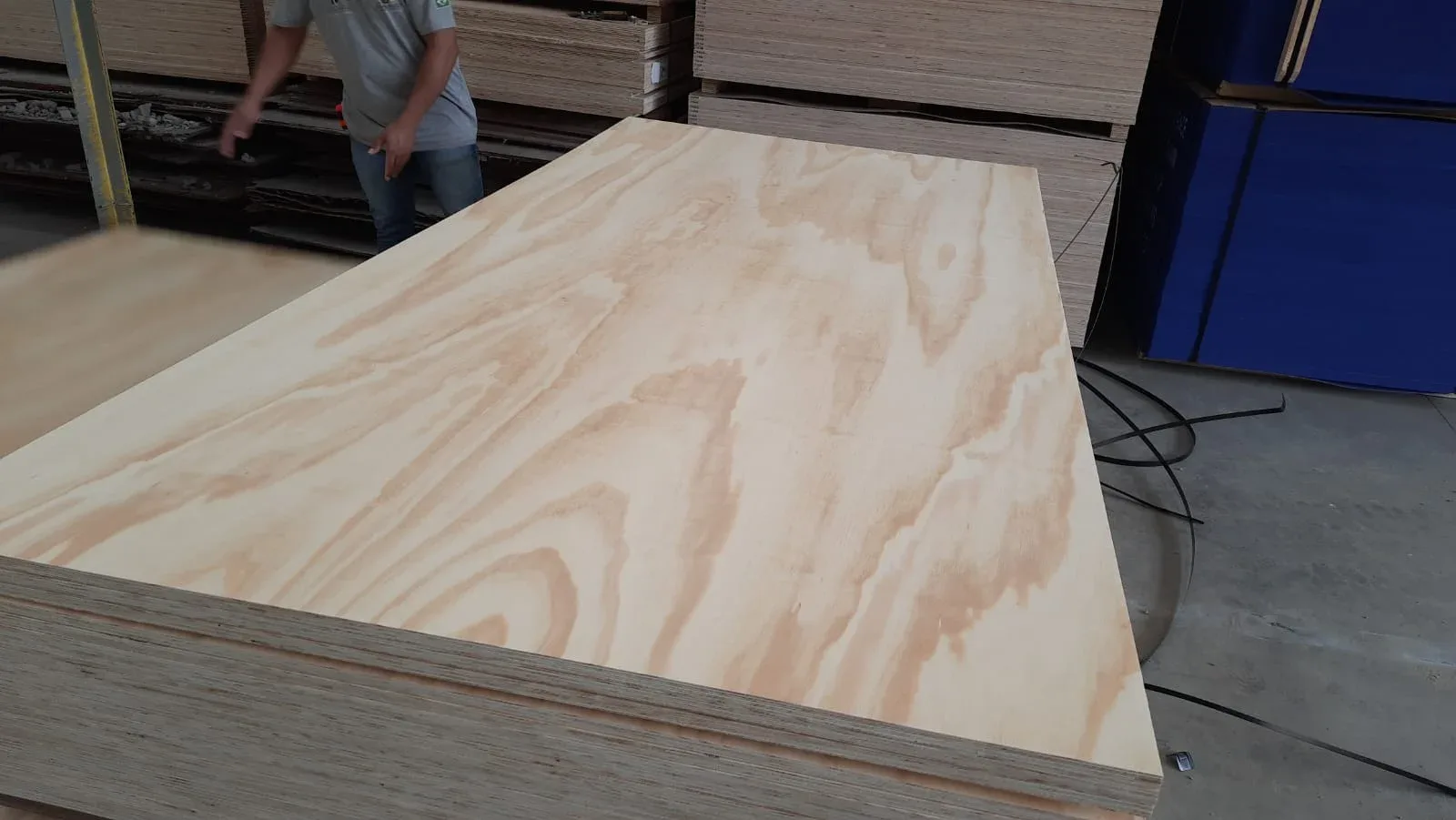
How CBM is calculated for plywood
For plywood panels, cubic metre volume is calculated as:
CBM = thickness (m) × width (m) × length (m) × number of sheets
Example:
- 18mm × 1220mm × 2440mm plywood, 250 sheets
- = 0.018 × 1.220 × 2.440 × 250
- = 0.018 × 2.9768 × 250
- = 13.40 CBM
For a 40ft high-cube container (approximately 76–77 CBM usable), you can fit roughly 5–6 line items of this size before reaching capacity.
Always cross-check the declared CBM against your own calculation. It is not uncommon to find rounding errors or data-entry mistakes in packing lists, particularly when multiple line items are combined.
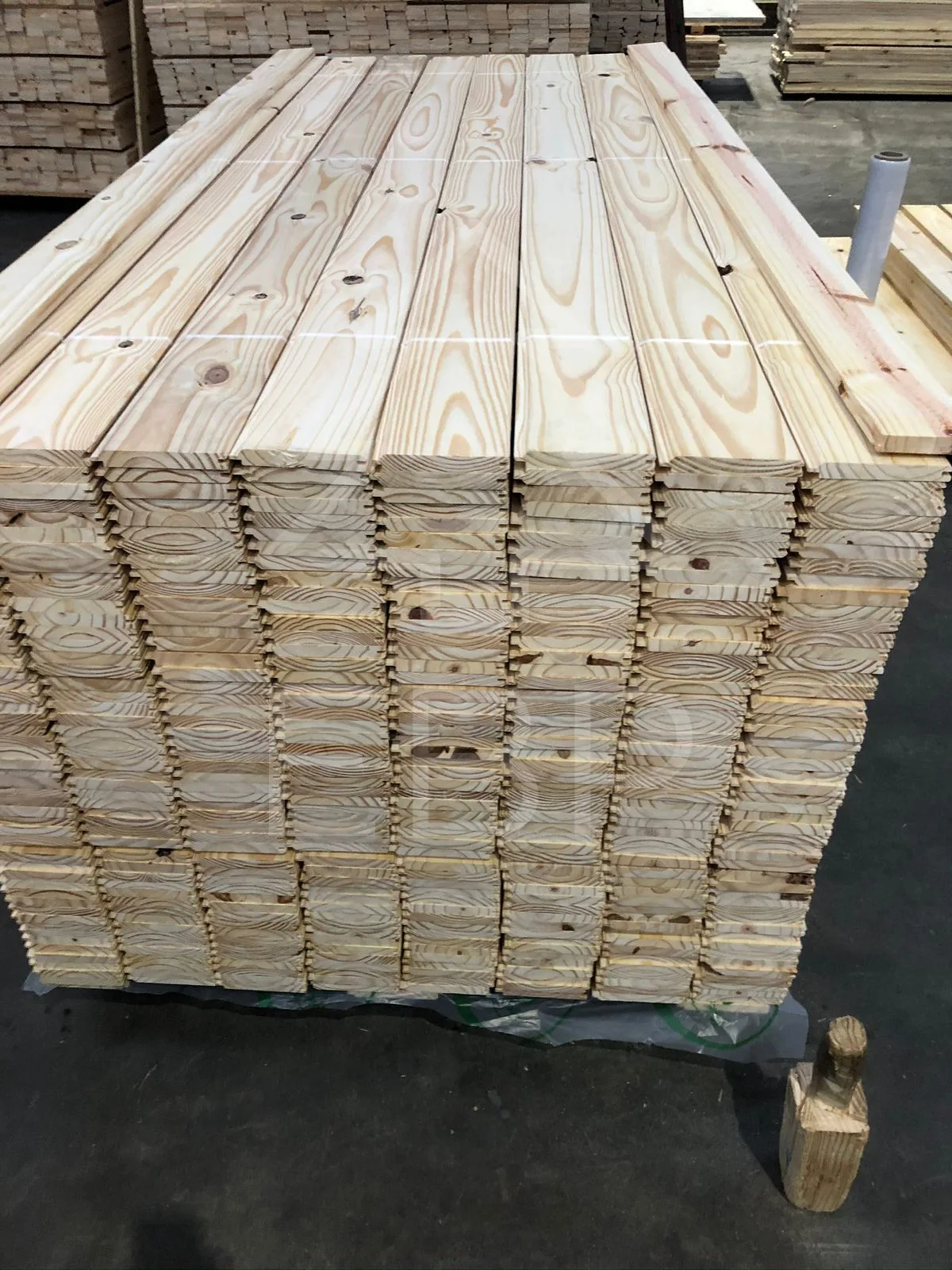
How CBM is calculated for sawn timber
For sawn timber (planks, boards, scantlings), the calculation is:
CBM = thickness (m) × width (m) × length (m) × number of pieces
Example:
- 50mm × 100mm × 3000mm sawn wood, 800 pieces
- = 0.050 × 0.100 × 3.000 × 800
- = 12.00 CBM
Note: Brazilian sawn timber dimensions are often given in nominal (rough sawn) sizes, not finished sizes. A "50 × 100mm" piece may be 47 × 97mm after surfacing (S4S / D4S). This is standard practice and should match the specification in your purchase order.
Unit conversion reference
Brazilian packing lists may mix metric and imperial units depending on the buyer's origin. Useful conversions:
| From | To | Multiplier |
|---|---|---|
| Cubic metres (CBM) | Board feet (BF) | × 423.78 |
| Board feet | CBM | × 0.00236 |
| Kilograms | Pounds | × 2.205 |
| Millimetres | Inches | × 0.03937 |
| 1200 × 2400mm sheet | 4 × 8 ft sheet | Equivalent (nominal) |
| 1220 × 2440mm sheet | 4 × 8 ft sheet | Slightly oversized |
What each column in a plywood packing list means
"Pcs" or "Sheets": Number of individual panels. Always verify this matches your purchase order quantity.
"Bundles" or "Packages": Plywood is normally shipped in bundles of 50–100 sheets per bundle, strapped with metal or plastic bands. The number of bundles determines how many units your receiving team needs to handle.
"Thickness" (e.g., 15mm, 18mm, 21mm): The nominal thickness. Actual thickness may vary by ±0.5mm depending on the product standard. E.g., 18mm nominal under EN 315 can be 17.5–18.5mm.
"Grade" (e.g., B/B, A/B, CDX, FF): The veneer quality grade. "B/B" means both face and back veneers meet the B-grade visual specification. "FF" or "F/F" usually means film-faced (concrete formwork).
"Bond" (e.g., WBP, MR, E1): The glue line type. WBP = phenol formaldehyde (exterior). E1 indicates the formaldehyde emission class, not the bond type — they are separate specifications.
"GW" (gross weight): Total weight including packaging (strapping bands, edge protectors).
"NW" (net weight): Weight of the product only, excluding packaging.
"CBM": Cubic metres as calculated above. This is the figure used for freight.
Sawn timber: additional columns
For sawn timber packing lists, you may also see:
"Green/KD/AD": Moisture status (Green = undried, KD = kiln-dried, AD = air-dried).
"MC%": Moisture content percentage at time of measurement.
"Length tolerance": Brazilian sawn timber often includes a random-length note (e.g., "3.0–5.0m, average 3.5m"). Verify that the average length used in the CBM calculation matches the actual average.
"Defect allowance": Some grades include an allowance for defects (knots, splits, wane). This is specified in the grade standard and should match your PO.
Common errors to catch before loading
CBM rounding errors. Re-calculate the CBM for each line item using the formula above. A common error is using 1200mm instead of 1220mm for standard sheet width, which understates volume by ~1.6%.
Missing bundles. Cross-reference "number of bundles" × "sheets per bundle" against total "number of sheets." If these don't reconcile, ask for clarification before the container is sealed.
Wrong grade or thickness. Verify every line item against your purchase order. A bundle of B/C substituted for B/B, or 15mm mixed in with 18mm, will cause problems on arrival.
Incorrect weight. Kiln-dried pine plywood at 18mm typically weighs approximately 12–14 kg per sheet (1220 × 2440mm). If gross weights are dramatically higher, the material may have higher moisture content than specified. A quick sanity check: divide total NW by total sheets to get kg/sheet and compare.
Missing container seal number. The seal number on the packing list must match the seal number recorded when the container is loaded. Discrepancies can delay customs clearance.
Using the packing list at goods receipt
When your container arrives at the warehouse:
- Verify the container seal number against the bill of lading and packing list before breaking the seal
- Count bundles as they are unloaded — confirm against packing list bundle count
- Spot-check sheet count in 2–3 bundles and extrapolate
- Spot-check thickness with a digital caliper on 5–10 sheets per grade
- Spot-check moisture content with a resistance probe if KD was specified
- Note any visible damage and photograph before moving to storage — this is required for any insurance or supplier claim
Export Brazil Pine includes a detailed packing list with every shipment. Any discrepancy found on arrival should be raised within 72 hours of container opening for prompt resolution.
Related reading
FOB vs CIF: Which Incoterm Is Right for Your Timber Import? · How to Vet a Brazilian Timber Supplier · ISPM 15 Heat Treatment for Timber Exports · Pine Plywood
Planning your first FCL shipment?
We guide you from proforma invoice to port delivery.
Stay informed
New guides, specs & market updates
Join 400+ timber importers who get our monthly brief — no spam, unsubscribe anytime.
Contents
Continue your sourcing research
Get a quote
Ready to source Brazilian timber? We will send specifications, pricing and photos within 24 hours.
Request a quoteRelated resources