Is Brazilian Pine Good for Furniture?
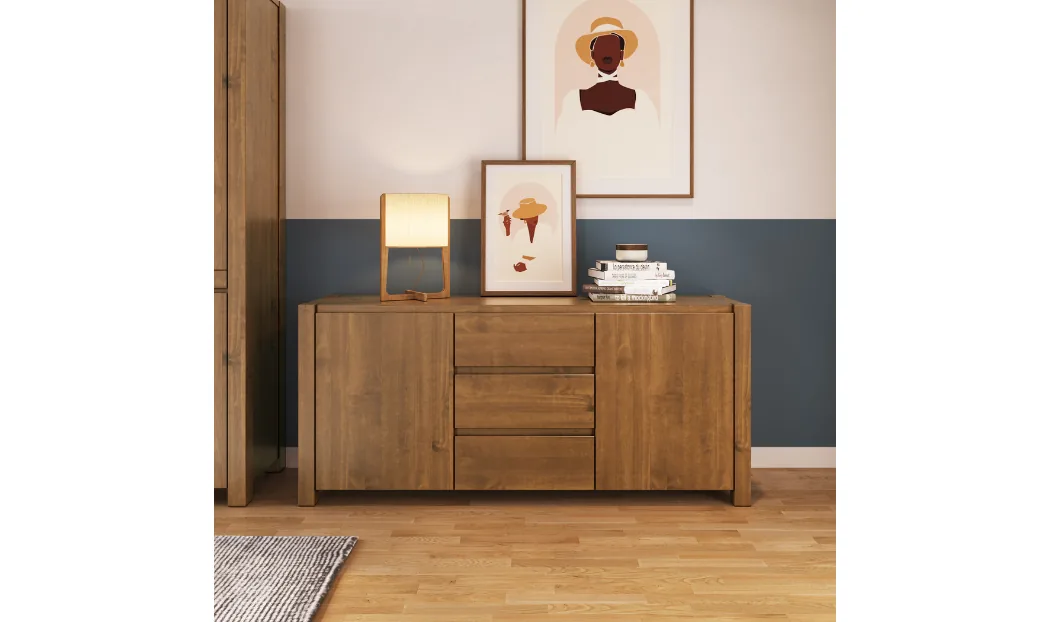
Brazilian pine is used to manufacture furniture that sells in IKEA suppliers' factories, major European retail chains, and independent furniture stores across the US, UK, Germany, and Australia. The simple answer to "is it good?" is yes — but with important nuances about grade, moisture content, and finish that affect how well it performs in any specific application.
This article gives you an honest picture of what Brazilian pine is, what it does well, and where its limitations are.
What is "Brazilian pine"?
"Brazilian pine" in the export market almost always refers to Pinus elliottii or Pinus taeda — two plantation-grown softwood species introduced from the southeastern United States in the mid-20th century and now cultivated across southern Brazil's Paraná and Santa Catarina states on a massive scale.
These are not the same as Araucaria angustifolia (Paraná pine, or "Brazilian pine" in the botanical sense), which is a native endangered species and no longer commercially harvested. Export products labelled "Brazilian pine furniture" are always the plantation pines.
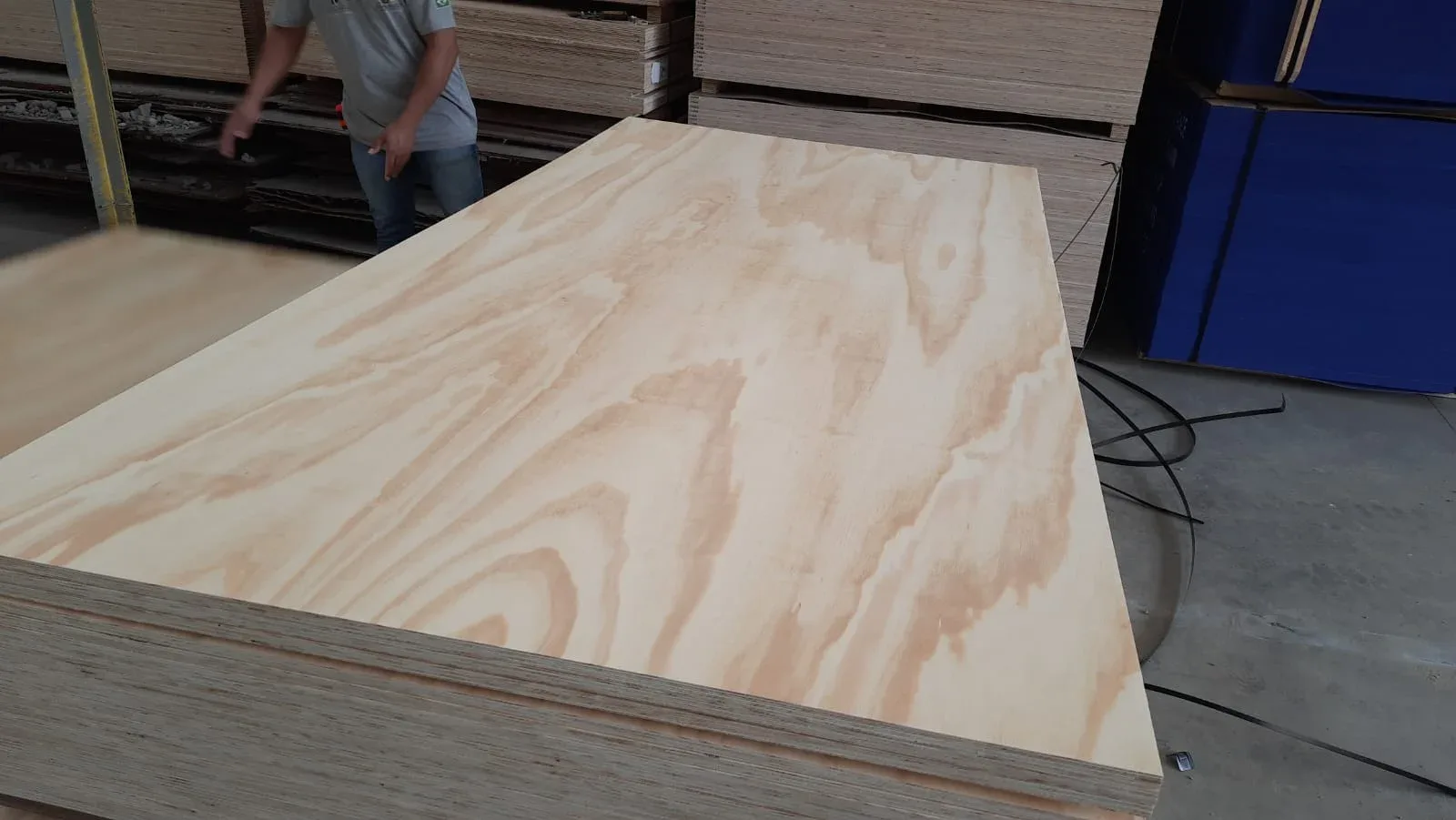
Plantation pine from southern Brazil is kiln-dried to 8–12% moisture content before furniture manufacturing, producing a stable, workable timber with consistent properties across the plantation.
Physical properties
| Property | Brazilian pine (Pinus elliottii) | European Scots pine | Radiata pine (NZ/Chile) |
|---|---|---|---|
| Density | 500–560 kg/m³ | 480–530 kg/m³ | 450–510 kg/m³ |
| Janka hardness | 870 N | 820 N | 780 N |
| Modulus of rupture | 75–90 MPa | 80–95 MPa | 70–85 MPa |
| Shrinkage (tangential) | ~7% | ~7.5% | ~7.2% |
| Stability (kiln-dried) | Good | Good | Good |
Brazilian plantation pine is comparable to European Scots pine and slightly denser than New Zealand or Chilean radiata pine. It is a softwood — significantly softer than oak (6000 N Janka), beech (5900 N), or ash (5900 N) — but well within the range used globally for bedroom furniture, dining sets, shelving, and case goods.
What Brazilian pine does well
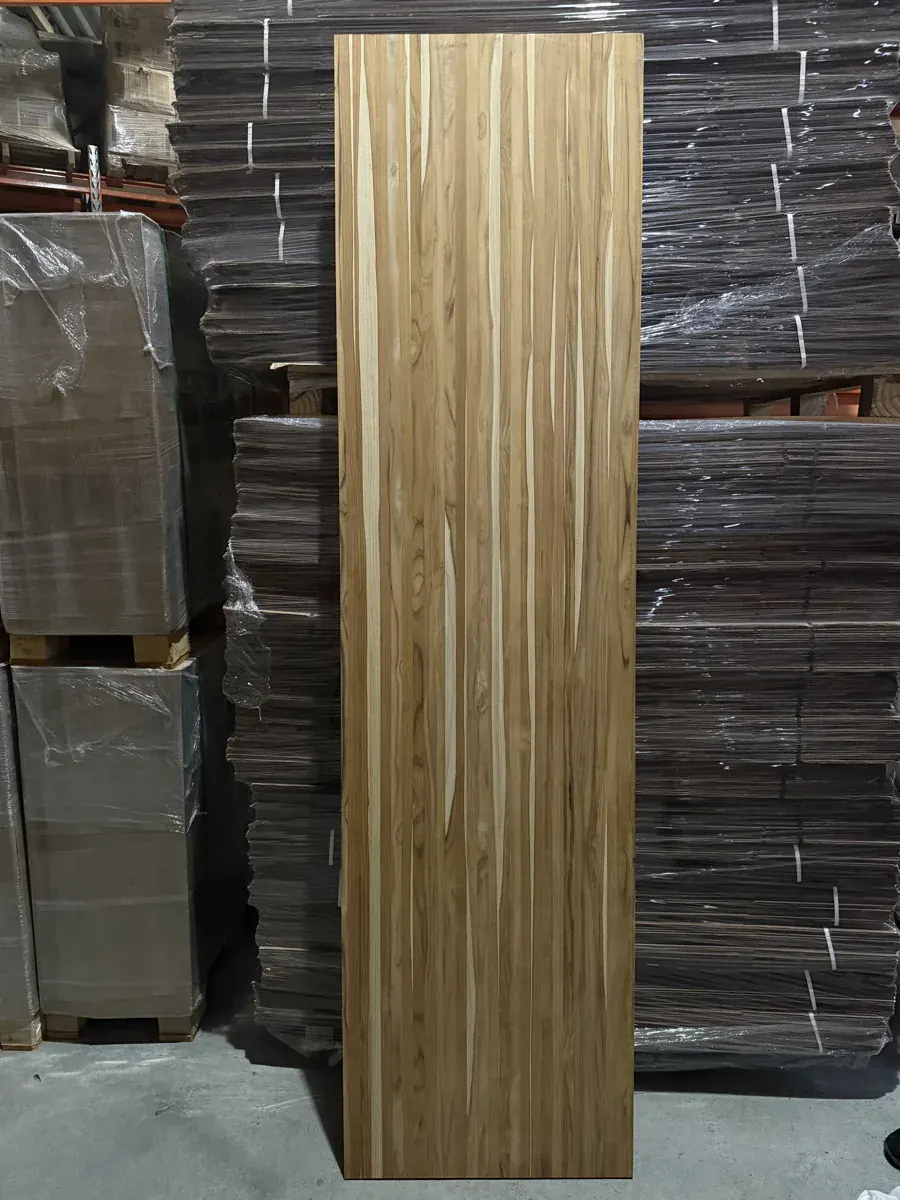
Furniture manufacturing. Plantation pine's consistent grain, predictable dimensions after drying, and ease of machining make it a natural furniture species. It glues, planes, sands, turns, and routs cleanly. CNC routing gives crisp results. Edge-jointing for wide panels produces tight, flat faces.
Accepting stain and paint. Brazilian pine's relatively tight grain takes water-based stains, oils, waxes, and lacquers well. The most popular export finishes for European and US markets are:
- Natural wax oil (preserves the pale, honey colour)
- White oil or white wash (popular in Scandinavian-style collections)
- Chalk paint (French country, shabby-chic aesthetics)
- Raw/primed (for the buyer to finish on arrival)
Knot character. Brazilian plantation pine has a moderate knot frequency that adds visual interest in rustic and farmhouse styles. Tight, sound knots are acceptable in B-grade material; A-grade and clear pine have fewer, smaller knots for more formal applications.
Weight-to-strength ratio. At 500–560 kg/m³, Brazilian pine furniture is light enough to sell as flat-pack and reassemble easily, while strong enough to support normal residential loads in shelving, bed frames, and table structures.
Limitations and how to manage them
It's a softwood. Pine scratches and dents more easily than hardwoods like oak or beech. For dining tables and desk surfaces that take daily abuse, a protective finish (lacquer, oil, or hard wax) is essential. Buyers should understand this is a value furniture material, not a heirloom hardwood.
Resin pockets. Plantation pine occasionally has resin pockets (small cavities filled with pitch resin) that bleed through finishes if not treated before painting. Quality furniture manufacturers seal knots and resin pockets with shellac-based sealant before topcoating. Ask whether this is part of the production process if you're buying painted furniture.
Grain variation. The grain in plantation pine is not as tight and consistent as slow-grown Scandinavian pine. This is visible in natural finishes. For buyers who want a very uniform, fine-grained appearance, select material from older-growth plantation trees (20+ year rotation) and specify "clear" or "A-grade" face veneers.
Moisture sensitivity. Like all wood, pine moves with changes in ambient humidity. Furniture imported to the US or northern Europe needs to be kiln-dried to the destination's equilibrium moisture content — typically 8–10% for US interiors, 10–12% for central European interiors. Furniture arriving with excess moisture content will shrink and may crack or show joint gaps after acclimatisation.
Solid pine vs pine-based MDF furniture
Most "pine furniture" in the market is a combination of solid pine (for structural elements, legs, and frames) and pine-based MDF or pine plywood (for panel surfaces, drawer bottoms, backs).
This is not a quality compromise — it's rational engineering. MDF provides dimensional stability and flat surfaces that solid wood cannot guarantee across wide widths. Solid pine provides the strength and visual appeal in visible structural members.
When evaluating Brazilian pine furniture:
- All-solid pine commands a premium but requires more moisture management
- Solid pine + MDF panels is the industry standard for quality B2B furniture
- MDF-only with pine veneer is a lower-cost option; structurally sound but lacks the weight and solidity of frame-and-panel construction
Grade options for furniture
Brazilian pine for furniture applications comes in three primary grade levels:
A/B grade — clear or near-clear face, minimal knots, tight grain. Best for painted furniture or natural-finish pieces where surface quality is prominent. Price premium over B/B.
B/B grade — sound knots permitted, small open defects filled. The industry standard for most natural and stained furniture. Good face quality visible but not perfectly clear.
Rustic / knotty — prominent knots, character marks, and grain variation. Intentional aesthetic choice for farmhouse, barn-style, and reclaimed-look furniture collections. Lower material cost, often higher retail value in the right market.
Who buys Brazilian pine furniture?
Brazilian pine furniture is supplied to:
- European retail chains — JYSK, Maisons du Monde, BnB Casa, and dozens of mid-market furniture retailers across Germany, France, the UK, Spain, and Poland
- US importers — bedroom and dining furniture for mass-market and mid-market retail
- Middle East hospitality — hotel bedroom furniture for 3–4-star properties across the UAE and Saudi Arabia
- Australian retailers — particularly Scandinavian-style natural pine in flat-pack format
The price-performance positioning of Brazilian pine sits between flat-pack Scandinavian pine (IKEA/Jysk range) and solid hardwood furniture. It is a credible mid-market material.
Summary
Brazilian plantation pine (Pinus elliottii / Pinus taeda) is a well-proven furniture material. It machines cleanly, finishes well, and produces furniture that is competitive in quality and value against European and radiata pine alternatives.
The key factors for a successful furniture import from Brazil:
- Specify the correct grade (A/B, B/B, or rustic) for your market
- Confirm moisture content target matches the destination climate
- Verify FSC certification if your retail customers require it
- Choose a manufacturer who seals knots and resin before topcoating
Related reading
Furniture from Brazil: Why Import? · Edge-Glued Solid Wood Panels Guide · Plywood Grades Explained · Pine Furniture
Ready to source Brazilian pine furniture? Export Brazil Pine works directly with established furniture factories in southern Brazil — no intermediaries. We handle quotations, specifications, quality control, and export documentation. 9 collections available in FSC-certified solid pine, flat-pack, with natural, white oil, or custom paint finishes. Request a catalogue and pricing →
Ready to source from Brazil?
We'll send specs, photos, and pricing within 24 hours.
Stay informed
New guides, specs & market updates
Join 400+ timber importers who get our monthly brief — no spam, unsubscribe anytime.
Contents
Get a quote
Ready to source Brazilian timber? We will send specifications, pricing and photos within 24 hours.
Request a quote