Importing Pine Plywood from Brazil to Australia
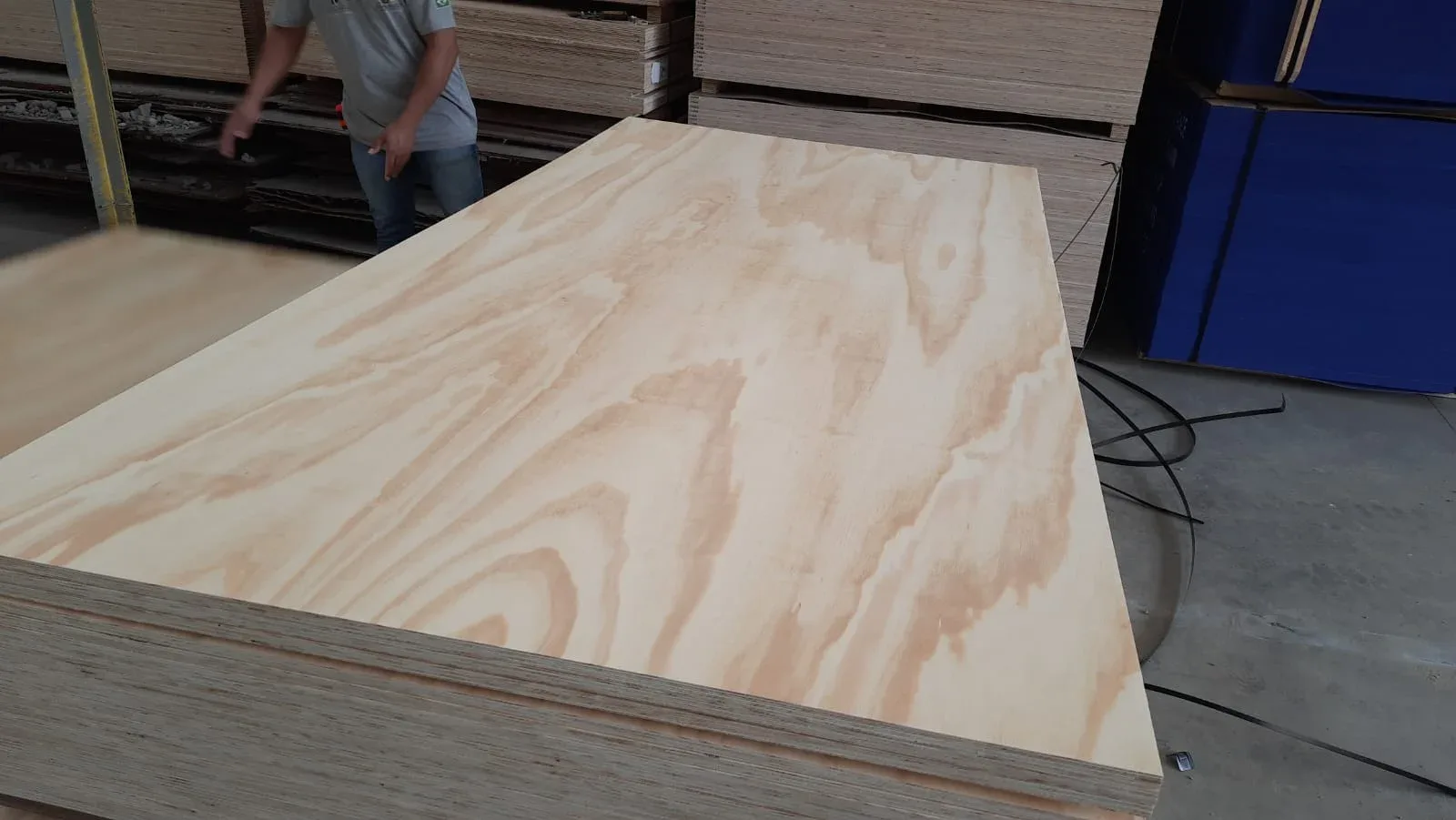
Australia is one of the most demanding markets in the world for timber imports. The Department of Agriculture, Fisheries and Forestry (DAFF) enforces strict biosecurity controls, and shipments that don't comply with Australian Biosecurity Import Conditions (ABICs) face fumigation, treatment, or destruction at the importer's cost.
Despite this, Brazil has become an increasingly competitive pine plywood source for Australian builders, manufacturers, and distributors — particularly as Southeast Asian supply chains tighten and product consistency becomes a key buying criterion.
This guide covers everything Australian importers need to know before placing their first Brazilian pine plywood order.
Why Australian buyers are looking at Brazil
Several factors are driving Australian interest in Brazilian pine plywood:
Consistent FSC-certified supply. Brazil's southern pine plantations (Pinus elliottii and Pinus taeda) are among the most extensive FSC-certified plantation forests in the world. For projects requiring chain-of-custody documentation — green building projects, major retail specifications — Brazilian supply offers certified product at scale.
Grade consistency. Brazilian manufacturers produce plywood to consistent visual grades (A/B, B/B, B/C, CDX) with well-controlled veneer sourcing. The grade specification you write in your PO is what arrives in the container.
WBP bond throughout. All Brazilian export plywood uses phenol formaldehyde (WBP) adhesive as standard. This meets or exceeds the bond requirements for structural applications under AS/NZS 2269 and the durability requirements for Queensland and Northern Territory construction environments.
Competitive USD pricing. Brazilian pine plywood is priced in USD FOB Paranaguá. Against the backdrop of strong demand from the US and EU pushing up Asian supply prices, Brazil often offers better value — particularly for full-container orders.
Australian biosecurity requirements
Australia has some of the strictest biosecurity regulations in the world, primarily managed through the Biosecurity Import Conditions system (BICON).
Key requirements for plywood imports:
ISPM 15 compliant packaging. All wooden packaging materials (pallets, crating, dunnage) must bear the IPPC mark showing heat treatment (HT). Australia does not accept methyl bromide (MB) treated packaging for most commodities. Confirm HT-only with your supplier.
Heat treatment of solid wood. If importing sawn timber (not plywood — processed wood products are exempt from most treatments), specific heat treatment or fumigation requirements apply depending on species and origin.
No loose bark, soil, or plant material. Shipments must be free of bark, soil, insects, and other organic material. Brazilian exporters handling professional container stuffing should comply as a matter of course.
Phytosanitary certificate. Issued by Brazil's MAPA (Ministry of Agriculture), this certificate confirms the shipment has been inspected and meets the importing country's phytosanitary requirements. Australia requires this for timber products.
Treatment on arrival (if required). DAFF may direct on-arrival treatments for certain commodity/origin combinations. Your customs broker should be familiar with current ABIC conditions for Brazilian pine products (HS codes 4412.31–4412.39).
Australian product standards for structural plywood
The key Australian/New Zealand standard for structural plywood is AS/NZS 2269:2012 — Plywood — Structural.
This standard specifies:
- Stress grades (F-grades: F7, F11, F14, F17, F22, F27)
- Bond type (A-bond = phenol formaldehyde for exterior, B-bond = PF/MF for non-structural interior)
- Species group classification
- Veneer quality grades for structural faces
- Characteristic values for structural design
Brazilian pine plywood with WBP (phenol formaldehyde) bond qualifies as A-bond under AS/NZS 2269. The stress grade will depend on the specific thickness, panel construction (number of plies, veneer thickness), and testing data.
For non-structural applications (furniture, shelving, packaging, internal fit-out), the relevant standard is AS/NZS 2271:2004 — Plywood and blockboard for interior use.
Many Australian importers also reference AS/NZS 4357 for structural plywood components.
If you are importing for residential or commercial construction projects that require proof of compliance, request structural test reports from the Brazilian manufacturer — typically issued by SGS, Bureau Veritas, or Intertek to the applicable Australian or equivalent international standards.
Formaldehyde requirements
Australia does not currently have a mandatory national standard for formaldehyde emissions from wood-based panels equivalent to the EU's E1 or California's CARB P2. However:
- Green building rating schemes (Green Star) and major retailer specifications increasingly require E1 or better
- Some state procurement frameworks specify low-emission requirements
- CARB P2 qualification is accepted as evidence of low-emission performance in Australia
All Export Brazil Pine plywood is supplied at E1 minimum (≤ 3.5 mg formaldehyde/m² per hour). E0.5 and CARB P2 qualified material is available on request.
Sourcing pine plywood for Australia? Export Brazil Pine ships direct FCL from Paranaguá with full ABIC-compliant documentation. Request a quote →
Freight routing: Brazil to Australia
Australia is served from Paranaguá (the main Brazilian pine plywood export port) via two primary routing options:
Trans-Pacific via Asia:
- Paranaguá → Shanghai/Singapore → Sydney/Melbourne/Brisbane
- Transit: approximately 30–38 days
- Usually cheaper but adds a transshipment
Direct or via South Africa:
- Paranaguá → Cape Town → Sydney/Melbourne
- Transit: approximately 32–42 days
- Less common; depends on carrier schedule
Freight rates to Australia from Brazil are higher than to European or US ports — expect USD 2,500–4,500/40'HC depending on routing and market conditions.
Australian buyers typically start with a 40'HC — our minimum — and find that a single container is the right volume to trial a new product line.
Currency and payment
Brazilian pine plywood is quoted FOB Paranaguá in USD. Australian importers pay in AUD, so exchange rate fluctuations affect landed cost. Hedging forward for large orders is advisable.
Typical payment terms are 30% deposit + 70% before loading (TT), or Letters of Credit (LC at sight) for larger orders or new relationships. Export Brazil Pine accepts both.
Typical landed cost calculation (Sydney, indicative)
| Cost element | Indicative range (USD/CBM, 40'HC FCL) |
|---|---|
| FOB price (B/B 18mm) | 380–440 |
| Ocean freight (Paranaguá → Sydney) | 80–130 |
| Insurance | 5–10 |
| Australian customs duty | 0% (Brazil → AU FTA benefit available) |
| Import GST (10%) | Applied on CIF + duty |
| Customs clearance and handling | 200–350 flat per shipment |
Australia and Brazil are both members of the WTO, and there is no additional tariff on plywood imports from Brazil beyond the standard MFN rate. Check the current rate with your customs broker, as tariff schedules are subject to periodic review.
Getting started
For Australian importers placing a first order, the recommended process is:
- review current-lot photos of the specific grade and thickness you need — A/B, B/B, or CDX in your target dimension
- Confirm compliance documentation — phytosanitary certificate, ISPM 15 certificate, FSC TC (if required), formaldehyde test report
- Appoint an Australian customs broker familiar with timber imports; BICON conditions for plywood can have nuances
- Start with a 40'HC FCL to validate grade, quality, and documentation before scaling volume
Use the inquiry form to request a quotation, technical documentation request, or full documentation package for Australian compliance review.
Related reading
CDX Plywood Specifications · A/B Grade Specifications · B/B Grade Specifications · Plywood Grades Explained · Import Duties on Plywood: USA, EU, UAE & Australia · Pine Plywood
Planning your first FCL shipment?
We guide you from proforma invoice to port delivery.
Stay informed
New guides, specs & market updates
Join 400+ timber importers who get our monthly brief — no spam, unsubscribe anytime.
Contents
Continue your sourcing research
Get a quote
Ready to source Brazilian timber? We will send specifications, pricing and photos within 24 hours.
Request a quoteRelated resources