Cheapest Plywood to Import: Brazil vs Chile vs Europe
When importers evaluate timber sourcing options, the conversation rarely starts with Brazil. Chile, Eastern Europe, and Southeast Asia are often the default references — the origins that buyers already have relationships with or that trading desks quote first. Brazil enters the picture as an alternative, and the comparison is rarely apples-to-apples.
This guide gives you an honest, product-by-product comparison of Brazil against the main competing origins — on price, lead time, quality, certifications, and which destination markets each origin serves best.
The Four Origins You're Probably Comparing
Chile — The dominant Southern Hemisphere source for pine plywood and finger-jointed panels, using Pinus radiata from large-scale plantations concentrated in Bio-Bío and La Araucanía regions. Chile's proximity to Atlantic markets is a disadvantage; its proximity to Pacific markets is a significant advantage.
Eastern Europe (Poland, Romania, Ukraine pre-2022) — Primary sources for spruce, pine, and birch plywood. Poland in particular is a major exporter of birch plywood and furniture-grade panels to the EU. The Russia-Ukraine war has significantly disrupted supply from this region since 2022.
Russia / Siberia — Until 2022, one of the world's largest softwood and birch plywood exporters. Western sanctions have effectively closed this origin for most European and North American importers.
Southeast Asia (Malaysia, Indonesia, Vietnam) — Historically dominant in tropical hardwood plywood (meranti, keruing), rubberwood panels, and increasingly pine from plantation sources in Vietnam. FSC compliance has been inconsistent; due-diligence requirements are stricter here than for plantation pine.
Price Comparison: FOB by Product Category
Price comparisons must be origin-specific and grade-specific. These are indicative FOB ranges based on market conditions — your actual quotes will vary by specification, volume, and timing.
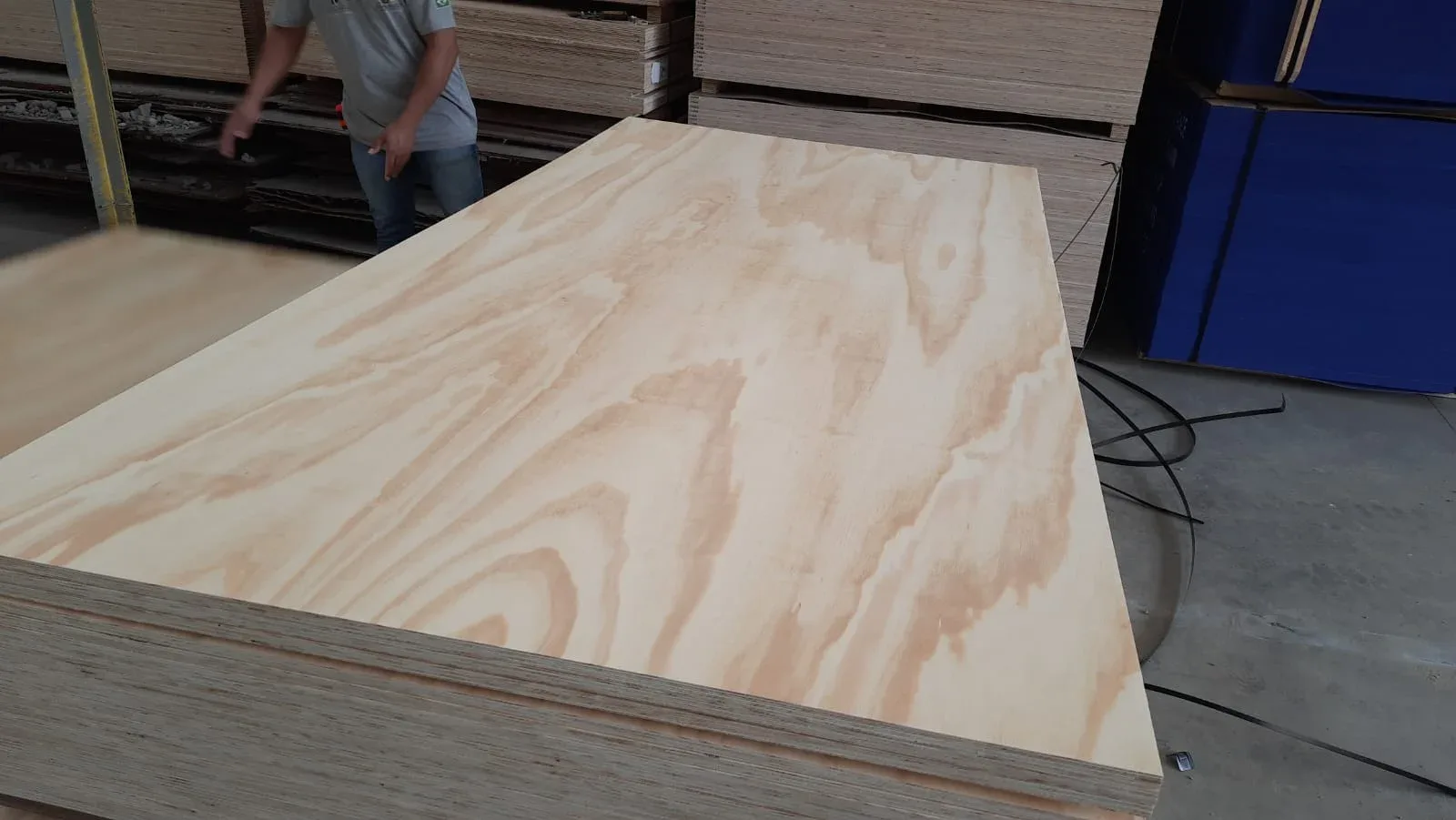
Pine Plywood (B/B, 18mm, 1220×2440mm, FSC)
| Origin | FOB Price Range | Notes |
|---|---|---|
| Brazil | USD 320–380/m³ | Consistent supply, FSC & CARB P2 available |
| Chile | USD 295–355/m³ | 5–12% cheaper ex-works; freight offsets on Atlantic routes |
| Eastern Europe | USD 370–440/m³ | Higher for certified product; supply disruptions since 2022 |
| Southeast Asia | USD 270–320/m³ | Variable quality; FSC certification harder to verify |
On landed cost to Rotterdam or Houston: Brazil's FOB price advantage over Chile is often recovered or exceeded by freight. Brazilian Atlantic ports (Paranaguá, Itajaí, São Francisco do Sul) have shorter transit times to European and East Coast US ports than Chilean Pacific ports.
MDF Panels (Standard, 18mm, FSC/E1)
| Origin | FOB Price Range | Notes |
|---|---|---|
| Brazil | USD 260–310/m³ | E1/E0 standard, consistent thickness tolerance |
| Eastern Europe | USD 280–340/m³ | Higher quality premium in some grades |
| Southeast Asia | USD 220–270/m³ | E2 formaldehyde common; E1 available at premium |
For European buyers, Brazilian MDF is often price-competitive with Eastern European product once freight is factored in, with the added benefit of E1 compliance as standard.
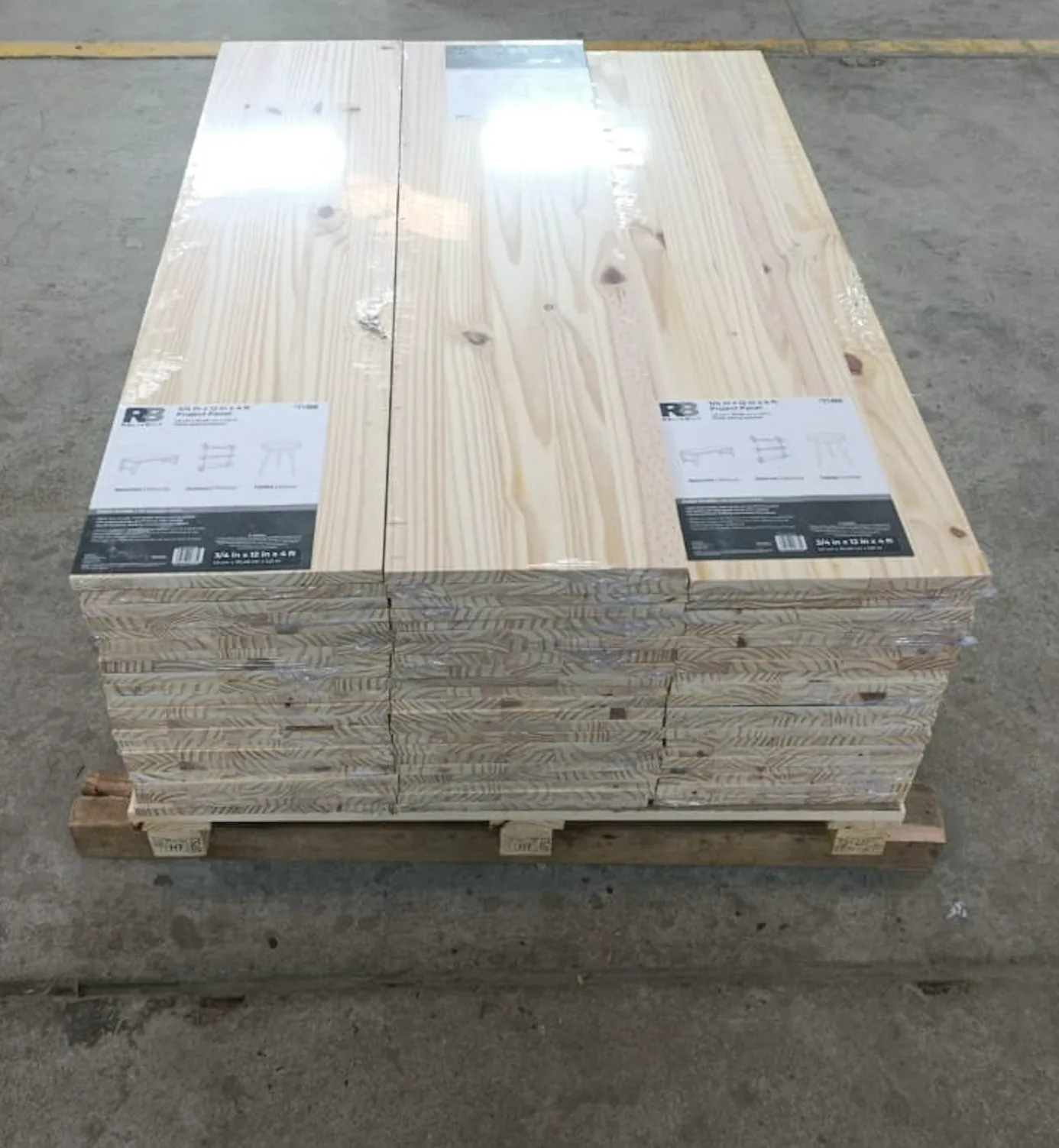
Solid Wood Panels (Pine, Edge-Glued, A/B)
| Origin | FOB Price Range | Notes |
|---|---|---|
| Brazil | USD 480–580/m³ | Pinus elliottii/taeda, tight grain, stable |
| Chile | USD 450–540/m³ | Pinus radiata, straighter grain, slightly lighter density |
| Eastern Europe | USD 520–620/m³ | Spruce panels, premium pricing in clear grades |
Pine Furniture (Bedroom Set, FOB, Flat-Pack KD)
| Origin | FOB Price Range | Notes |
|---|---|---|
| Brazil | USD 280–380 per set | 9 established collections, UV-cured lacquer standard |
| Eastern Europe | USD 420–560 per set | Higher labour costs; strong joinery tradition |
| Southeast Asia (Vietnam) | USD 240–320 per set | Rubberwood or plantation pine; quality varies widely by factory |
Lead Times: From Order Confirmation to Vessel Loading
Lead time is often the deciding factor for buyers managing tight inventory cycles. These are typical ranges, not guaranteed timelines.
| Origin | Typical Lead Time | Key Variable |
|---|---|---|
| Brazil | 6–10 weeks | Mill backlog; standard grades faster than custom |
| Chile | 6–9 weeks | Similar mill structure to Brazil |
| Eastern Europe | 8–14 weeks | Post-2022 supply disruptions have stretched timelines |
| Southeast Asia | 4–8 weeks | Faster on commodity grades; slower on FSC-certified product |
Transit time to key markets adds to lead time:
| Route | Brazil | Chile | SE Asia |
|---|---|---|---|
| To Rotterdam | 18–22 days | 28–35 days | 22–28 days |
| To Houston (East Coast) | 12–16 days | 30–38 days | 32–38 days |
| To Jeddah | 20–25 days | 38–45 days | 18–22 days |
| To Melbourne | 28–35 days | 18–22 days | 20–26 days |
Key takeaway: For North American and European buyers, Brazil's Atlantic position typically means faster door-to-door delivery than Chile, despite similar mill lead times. For buyers in Australia and the Pacific, Chile has a clear transit advantage.
Quality and Consistency
Surface and Grade Consistency
Brazil produces pine plywood and panels from plantation Pinus taeda and Pinus elliottii with tighter growth rings than tropical alternatives. This results in higher density, better glue penetration, and more predictable dimensional stability. Grade consistency across batches is strong at established mills.
Chile uses Pinus radiata, which has a straighter, more uniform grain — preferred in some applications for clear-grade furniture facing. However, radiata is slightly lower in density than Brazilian species, which affects performance in structural applications.
Eastern European spruce and pine are traditionally high quality, with mature quality management systems. However, supply chain disruptions since 2022 have pushed buyers toward less-established mills, introducing quality variability.
Southeast Asia is highly variable. The same product specification can yield dramatically different results depending on the specific factory. FSC-certified Vietnamese pine, for example, ranges from excellent to inconsistent depending on the certifying body and audit frequency. Buyers need robust pre-shipment inspection.
Certification Availability
| Certification | Brazil | Chile | Eastern Europe | SE Asia |
|---|---|---|---|---|
| FSC Chain of Custody | ✓ Widespread | ✓ Available | ✓ Available (disrupted) | △ Variable |
| CARB P2 (USA) | ✓ Many mills | △ Limited | △ Limited | △ Variable |
| E1 Formaldehyde (EU) | ✓ Standard | ✓ Available | ✓ Standard | △ Variable |
| EN 636 (Structural EU) | ✓ Plywood | ✓ Plywood | ✓ Spruce/pine | △ Limited |
| EUDR Compliance | ✓ Plantation traceable | ✓ Plantation traceable | △ Complex post-2022 | △ Higher risk |
For CARB P2 compliance (required for California and increasingly adopted by major US retailers), Brazil has a clear advantage. Most established Brazilian mills hold CARB P2 certification. Chilean mills have CARB P2 options but a narrower selection.
For EUDR compliance (EU Deforestation Regulation, effective from December 2024), Brazilian plantation pine is straightforward to document — the supply chain from specific plantation parcels is traceable and documented. Eastern European origins have become more complex since 2022 due to supply chain uncertainty.
Supply Reliability
This is where origins diverge most sharply since 2022.
Brazil has the most stable supply chain among the major pine-producing origins. Brazil's plantation base in Paraná, Santa Catarina, and Rio Grande do Sul is geographically distributed, not subject to wildfire or drought risk at the same scale as other origins, and politically insulated from the European supply disruptions. Lead times have remained predictable.
Chile has faced periodic production disruptions from wildfires in the Bio-Bío region, which is Brazil's major plantation area. The 2022–2023 fire season caused significant short-term supply shortages in Chilean pine product. Supply has broadly recovered, but fire risk is structural.
Eastern Europe has been severely disrupted by the Russia-Ukraine war. Sanctions on Russian timber (which was a major global supplier of spruce, birch plywood, and oriented strand board) created supply gaps that Eastern European mills partially filled but could not fully replace. Lead times and pricing have been volatile since early 2022.
Southeast Asia supply is generally available but quality consistency remains a challenge without deep factory relationships. Vietnam-grown plantation pine has grown significantly as an origin but due-diligence requirements are higher for EUDR and Lacey Act compliance.
Which Origin for Which Market?
Buy from Brazil if you're supplying:
- North America, Europe, or the Middle East — Atlantic position gives competitive landed cost
- Markets requiring CARB P2 compliance
- Buyers with sustainability requirements needing FSC + EUDR documentation
- Value-added product mix (plywood + panels + furniture + mouldings from one origin)
- Long-term stable supply relationships with predictable pricing
Chile remains competitive for:
- Australia, New Zealand, and Pacific markets — shorter transit
- Latin America — geographic and freight advantage
- Buyers sourcing exclusively commodity CDX plywood where price differential justifies the longer Atlantic transit
- Clear-grade furniture facing where radiata's straighter grain is preferred
Eastern Europe still makes sense for:
- EU buyers with deep existing relationships and specialist birch plywood requirements
- Buyers willing to manage supply risk for premium spruce or birch grades
- Not recommended as a primary source for new supply chain builds until the region stabilises
Southeast Asia (Vietnam, Malaysia) for:
- Cost-sensitive buyers willing to invest in factory qualification
- Rubberwood and acacia furniture where the origin has genuine comparative advantage
- Buyers with internal quality inspection capability on the ground
The Practical Verdict for B2B Importers
For most importers supplying North American, European, and Middle Eastern markets, Brazil offers the best overall combination of price, supply reliability, certification depth, and transit time. Chile is competitive on price but disadvantaged on certification (especially CARB P2) and transit on Atlantic routes. Eastern Europe carries elevated supply risk post-2022. Southeast Asia offers lower prices but requires more rigorous supplier management.
The strongest argument for Brazil is not that it wins on any single dimension — it rarely has the absolute lowest price — but that it performs consistently across all dimensions simultaneously. For a buyer building a reliable, certifiable, long-term supply chain, that consistency has a real value that doesn't appear in a simple FOB price comparison.
Sourcing Brazilian Pine with Export Brazil Pine
Export Brazil Pine works as a direct agent connecting importers and distributors to established mills in southern Brazil. We provide pricing comparisons, certification packages, and logistics coordination — so you can evaluate Brazil against your current origins with concrete numbers.
Request a quote → · About our export service →
Related reading: Brazilian Pine vs Radiata Pine · FOB vs CIF: Which Incoterm? · Plywood Grades Explained
Ready to source from Brazil?
We'll send specs, photos, and pricing within 24 hours.
Stay informed
New guides, specs & market updates
Join 400+ timber importers who get our monthly brief — no spam, unsubscribe anytime.
Contents
Continue your sourcing research
Get a quote
Ready to source Brazilian timber? We will send specifications, pricing and photos within 24 hours.
Request a quoteRelated resources