Importing Timber to UAE and Saudi Arabia From Brazil
The UAE and Saudi Arabia are two of the most active timber importing markets in the Middle East, driven by construction booms, furniture demand, and packaging requirements. Brazil is a well-established supply origin for both markets — offering competitive FOB pricing, short transit times via Jebel Ali and Dammam, and the documentation infrastructure required for GCC import.
Why Brazil for the Middle East?
Geography. Paranaguá (Brazil) to Jebel Ali (UAE): 20–25 days. To Dammam (Saudi Arabia): 22–27 days. This is competitive with Southeast Asian origins and faster than South American alternatives via the Pacific.
No anti-dumping. Neither the UAE nor Saudi Arabia have anti-dumping measures on Brazilian timber products.
FSC and documentation. Middle Eastern buyers increasingly require FSC certification and comprehensive documentation for project specifications, government tenders, and retailer sourcing policies.
GCC customs duties
Under the GCC Customs Union Common External Tariff:
| Product | HS Code | Duty rate |
|---|---|---|
| Softwood plywood (pine) | 4412.31 | 5% |
| MDF panels | 4411.12/14 | 5% |
| Sawn timber | 4407.11 | 0%–5% |
| Solid wood panels | 4418 | 5% |
Duties are calculated on CIF value (cost + insurance + freight to GCC port).
Saudi Arabia additionally requires compliance with SASO (Saudi Standards, Metrology and Quality Organization) for certain product categories. Confirm SASO requirements for your specific product at time of inquiry.
Key ports
UAE:
- Jebel Ali (Port of Dubai) — largest port in the Middle East; direct services from Brazilian ports; excellent onward distribution within GCC
- Abu Dhabi (Khalifa Port) — growing capacity; used for project cargo
Saudi Arabia:
- Dammam (King Abdulaziz Port) — main east coast port; serves eastern province and Riyadh
- Jeddah Islamic Port — main west coast port; serves Mecca, Medina and western region
Transit times from Brazil
| Brazil port | Jebel Ali | Dammam | Jeddah |
|---|---|---|---|
| Paranaguá | 20–25 days | 22–27 days | 20–24 days |
| Santos | 21–26 days | 23–28 days | 21–25 days |
Documentation for GCC import
Standard EBP documentation package covers all GCC requirements:
| Document | Required for |
|---|---|
| Commercial Invoice | Customs clearance |
| Packing List | Customs |
| Bill of Lading | Shipping/customs |
| Certificate of Origin | Duty assessment and GCC rules of origin |
| Phytosanitary Certificate | All timber products |
| ISPM 15 Heat Treatment Certificate | All solid wood |
| FSC Transaction Certificate | When FSC grade ordered |
| SASO compliance (if required) | Saudi Arabia specific |
Products most commonly imported to the GCC
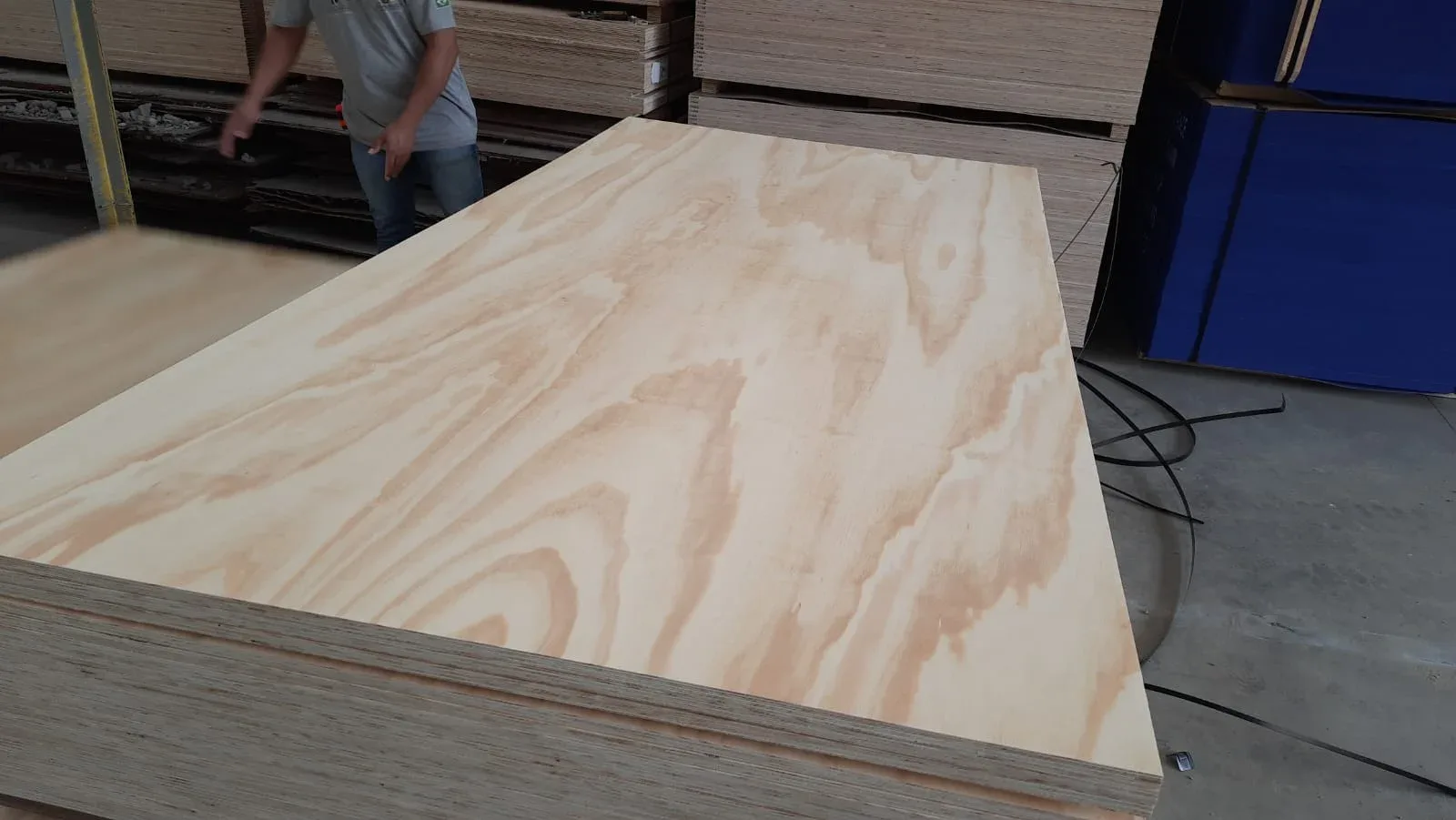
Pine plywood (CDX, A/B, B/B): Used in construction, fit-out, shuttering. A/B and B/B for furniture and joinery.
Film-faced plywood: Widely used in GCC construction for concrete formwork. Demand is strong given the construction activity in the region.
MDF panels: Standard and MR grades for furniture manufacturing and joinery workshops across the UAE and Saudi Arabia.
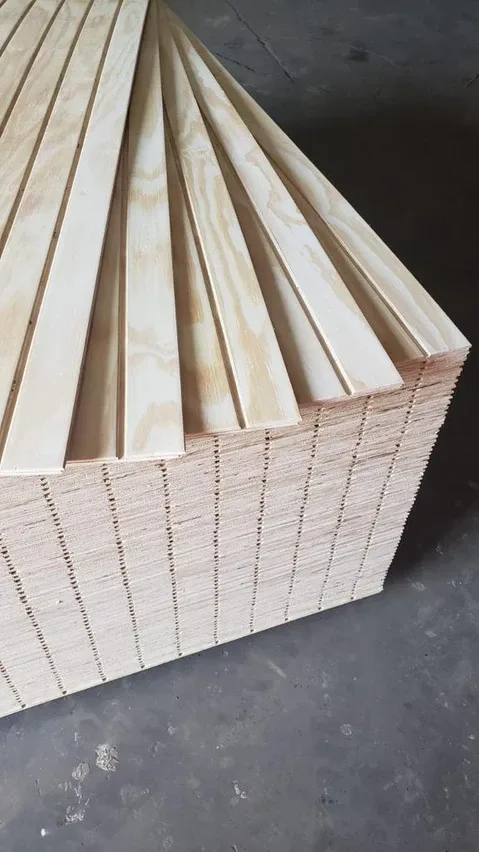
Sawn pine: Structural and bed slat applications; logistics and packing industries.
SASO requirements for Saudi Arabia
The Saudi Standards, Metrology and Quality Organization (SASO) imposes additional requirements on some product categories beyond standard GCC tariff documentation.
For timber products:
- MDF panels may require a SASO certificate of conformity before shipment
- Plywood for construction may require SASO documentation for government or semi-government projects
- Formaldehyde class — Saudi Arabia increasingly requires E1 class documentation even where not yet formally mandated
Confirm SASO requirements with your Saudi customs broker before placing an order. EBP can coordinate the relevant laboratory testing and certification at the production stage if required. Additional lead time (1–2 weeks) and cost should be anticipated.
Practical first-order guide for GCC buyers
Step 1 — Specify products and confirm SASO needs Submit your product list (grade, thickness, species, quantity). Advise whether the shipment is destined for Saudi Arabia — this triggers a SASO check.
Step 2 — Receive proforma invoice EBP issues a proforma within 24 hours for standard products. Includes FOB and CIF pricing options.
Step 3 — Confirm Incoterm and port of discharge FOB Paranaguá is standard. CIF Jebel Ali or CIF Dammam is available if you prefer EBP to arrange freight and insurance.
Step 4 — Deposit and production 30% deposit confirms production. Lead time: 4–6 weeks. Remaining 70% T/T against copy of Bill of Lading.
Step 5 — Arrange customs clearance Engage a licensed GCC customs broker with experience in timber imports. Provide the full documentation package issued by EBP.
Common challenges and how to avoid them
Challenge: Phytosanitary rejection at GCC ports Brazil issues MAPA phytosanitary certificates for all timber exports — this is a standard export document. Rejection is rare if the certificate is in order. Ensure the certificate arrives with the original shipping documents before vessel discharge.
Challenge: Certificate of Origin for GSP/duty claims UAE and Saudi Arabia do not currently offer preferential rates on Brazilian timber, so the standard Certificate of Origin (issued by the Brazilian Trade and Industry Federation — FIESP/FIRJAN) is sufficient for GCC customs clearance. No EUR.1 or GSP Form A is required.
Challenge: Shipment delays via transshipment Most Brazil-to-Gulf services transship via Singapore, Port Klang, or Colombo. Build transit time variability (±3–5 days) into your project scheduling.
Pricing in the GCC market
FOB Paranaguá pricing is the standard basis. Most Middle East buyers prefer CIF Jebel Ali or CIF Dammam so EBP arranges freight and insurance, simplifying landed cost calculation.
CIF Jebel Ali = FOB Paranaguá + ocean freight (typically USD 1,400–2,000/40'HC) + marine insurance (~0.9% of CIF value). From that CIF value, 5% GCC duty is assessed by UAE customs.
Request a CIF proforma at the time of inquiry for a complete landed cost breakdown.
Related reading
FOB vs CIF: Which Incoterm Is Right for Your Timber Import? · EUDR and Brazilian Timber · Pine Plywood · MDF Panels
Ready to source from Brazil?
We'll send specs, photos, and pricing within 24 hours.
Stay informed
New guides, specs & market updates
Join 400+ timber importers who get our monthly brief — no spam, unsubscribe anytime.
Contents
Continue your sourcing research
Get a quote
Ready to source Brazilian timber? We will send specifications, pricing and photos within 24 hours.
Request a quoteRelated resources